Strange noises from the rope suspending you 30 feet from the ground will sharpen the senses and bring focus to the mind.
I recently went outdoor climbing for the first time.
As far as my experience with outdoors activities go, nothing else has brought such an instant change in perspective as real, honest-to-goodness rock climbing — both literally and figuratively.
Let’s start with the literal.
We climbed at Cragmont Rock Park in Berkeley. Dedicated in 1920, Cragmont is a three-acre park in Berkeley’s Northbrae neighborhood.
From the park entrance on Regal Road at Hilldale Avenue, Cragmont looks like a typical neighborhood park.
There’s a picnic table by the curb and a temporary restroom. To the right there’s a footpath leading up a gentle incline to the top of a rocky hill with a smattering of trees.
But to the left and out of view from the street is a steeper, rougher path that descends along a fence line that marks the edge of the park.
This trail skirts the exposed, steep sides and base of the rocky hill.
Depending on where you’re at along the base, you’re looking up at 30 to 50 feet of steep, and sometimes vertical, rock.
Even though the climbing routes at Cragmont are considered easy for experienced climbers, your perspective on the park changes drastically depending on whether you walked in on the path to the right or the left.
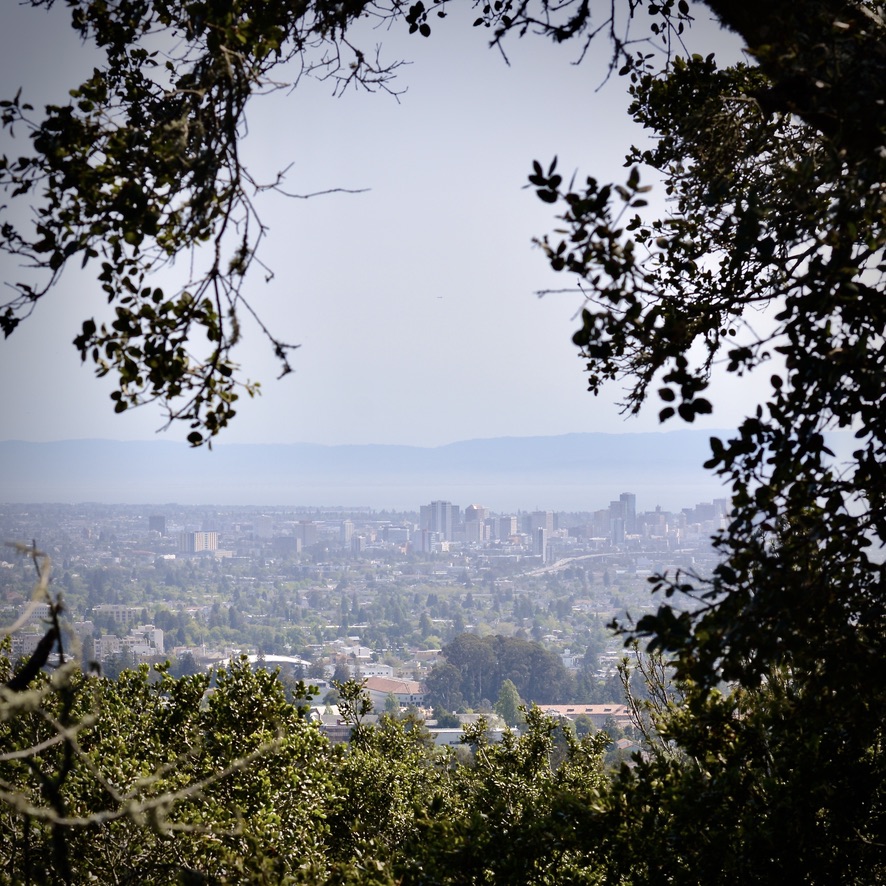
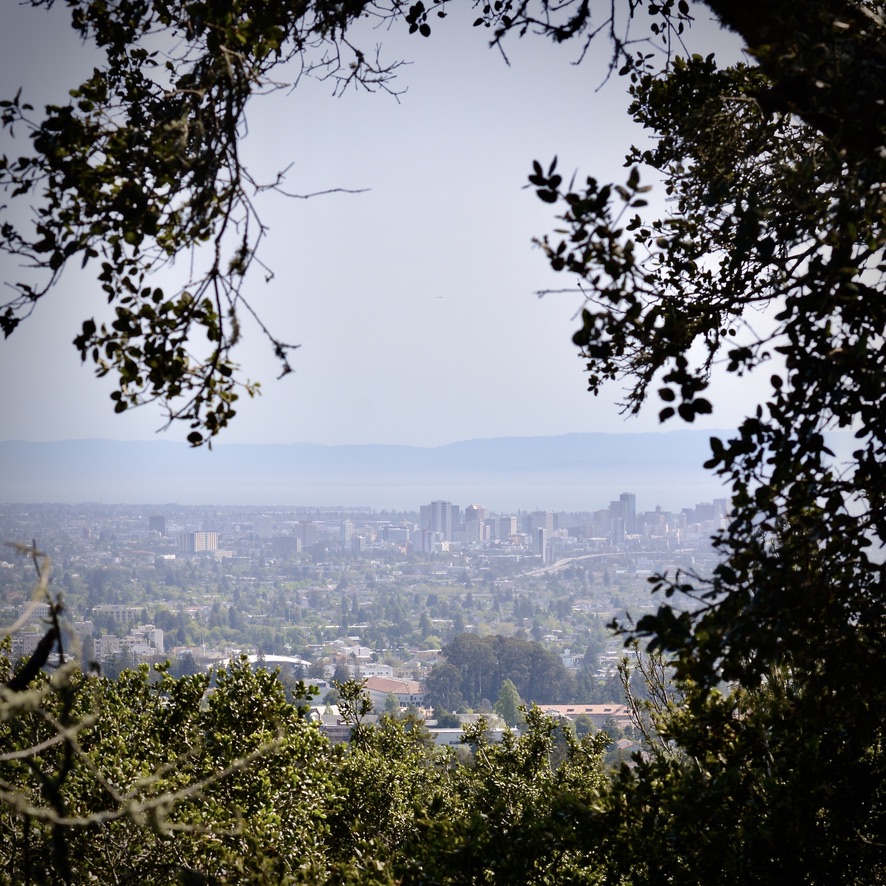
The path on the right is an easy, paved stroll to the top of the knoll where there’s a basketball court, pavilion, space for cookouts and an incredible view of the San Francisco Bay and beyond.
The path on the left is squeezed on one side by the border fence and loomed over on the other by the rock. Whatever views aren’t obstructed by fence or stone are blocked by trees.
From this path, the only way to gain that incredible Bay Area view is to climb for it.
The notion of going rock climbing has been percolating in my brain for awhile. It really began to crystallize a few years ago when a climbing gym opened near my home.
I made a few trips to the gym with friends and had a blast. Climbing is an incredible form of exercise with the added benefit of engaging your mind in a way that running, weights or resistance training doesn’t.
What I didn’t like about the gym was the crowds, the noise and missing the feeling of adventure that comes with going into the mountains. Still, it was enough to pique my interest.
While I didn’t become a gym rat, those few visits planted a seed that mostly struggled to further sprout in the ensuing months and years.
For starters, outdoor climbing can be a dangerous sport that requires extreme trust in yourself and your partner.
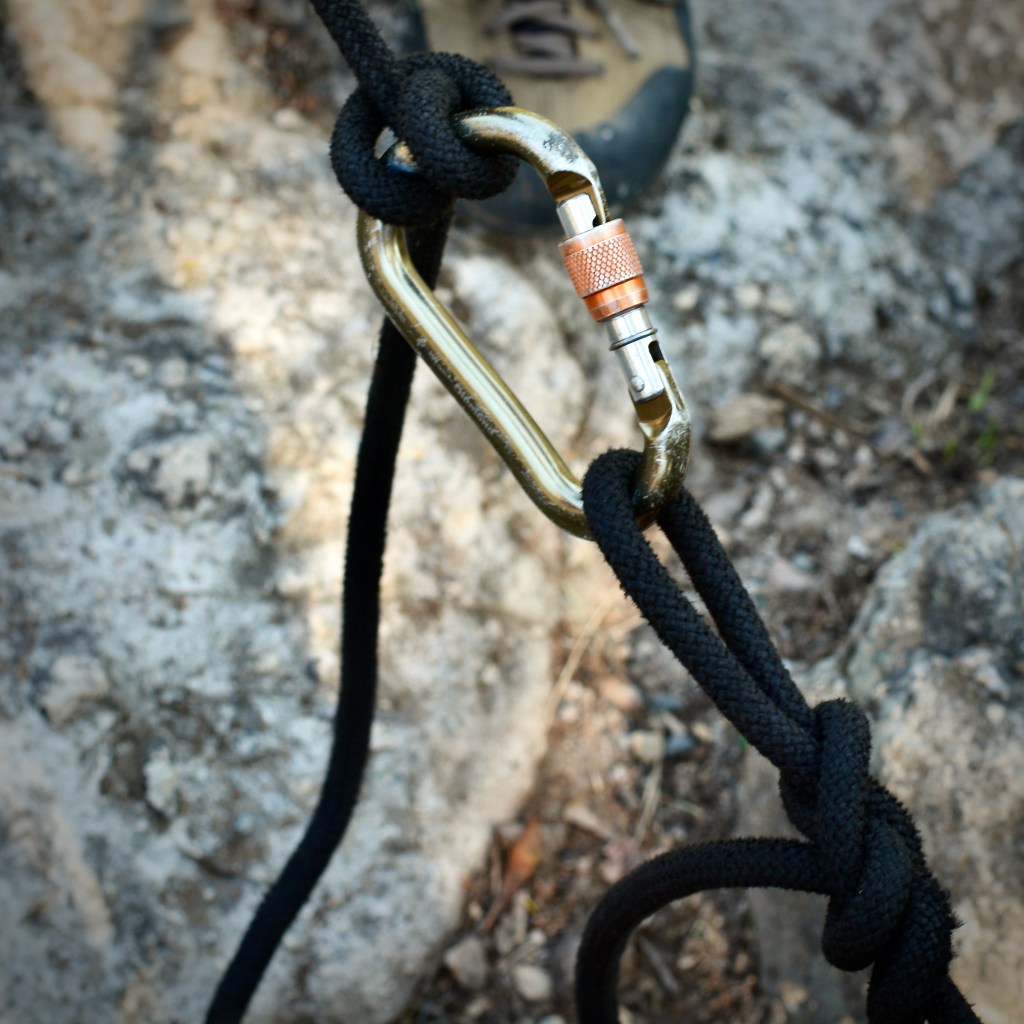
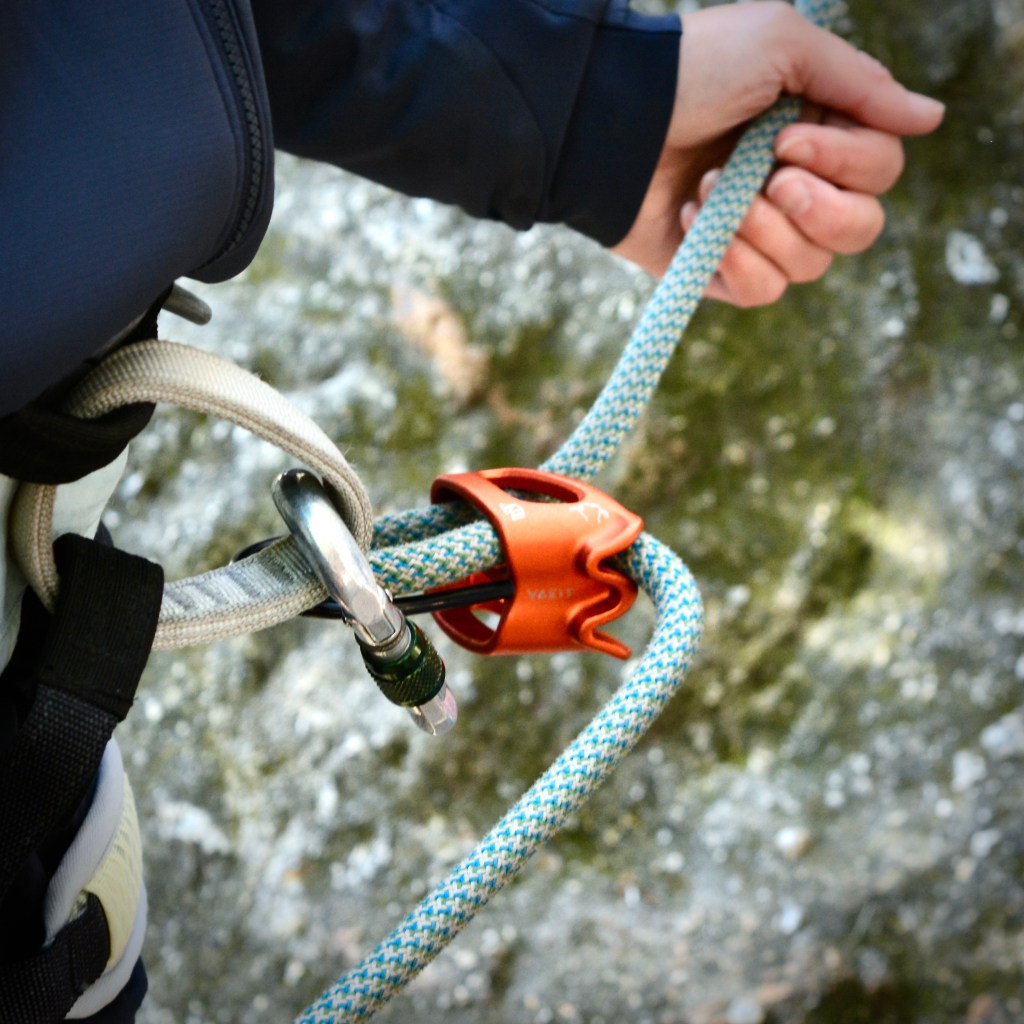
If you’re the climber you’re trusting both the knot you tied to your own harness and your partner, or belayer, who is maintaining tension on the rope.
If you’re top-roping, that is, climbing with a rope that’s anchored from above, which is how most people learn the sport, you’re also trusting whatever anchoring system you and your partner have rigged up.
For me to get started it took:
- Finding people I’d trust to show me the ropes, so to speak
- Having a time when I could get together for a climbing day
- Access to reliable gear such as rope, protection, helmets and shoes
- Knowing where to go and being able to get there
It’s easy to see why it can be difficult for a beginner to gain a foothold in the sport once you start stacking up the circumstances that need to align to actually go.
My desire to climb picked up in recent months as I took an interest in applying to join a backcountry ski patrol in the Sierra Nevada. The skills required to join a patrol include rope skills that overlap with climbing, giving me added incentive to focus my search for learning opportunities.
As luck would have it, I noticed a group from the Truckee, Calif.,-based Outdoor Adventure Club was organizing a beginners’ climbing excursion on a day I was available in a location I could get to.
Having joined OAC-run avalanche courses in the past I’ve seen their commitment to safety, inclusiveness, education and fun on snow which gave me the confidence the OAC Cragmont trip would be a great chance to take the plunge into climbing without taking any actual plunges while climbing.
On climbing day all I had to do was show up at Cragmont on time and with the right attitude for learning and teamwork.
The only downside of the day was the climbing shoes caused intense pain in my big toes, even after I moved up 1/2 size. The pain seemed to come from the top of the toebox impacting my toes and it intensified with pressure. And climbing, it turns out, involves putting a lot of your weight on your big toe.
The toe pain was a big enough issue for me that it made it difficult to focus on and complete maneuvers. (Side note: After the trip I went to REI and found a pair of climbing shoes that didn’t hurt my feet so hopefully this was a one time problem.)
Aside from the toe pain, the rest of the climbing experience was sublime.
At the beginning of the day I was assigned an equally inexperienced partner. With some instruction and oversight from our guide we practiced tying knots and learned belaying technique on the ground.
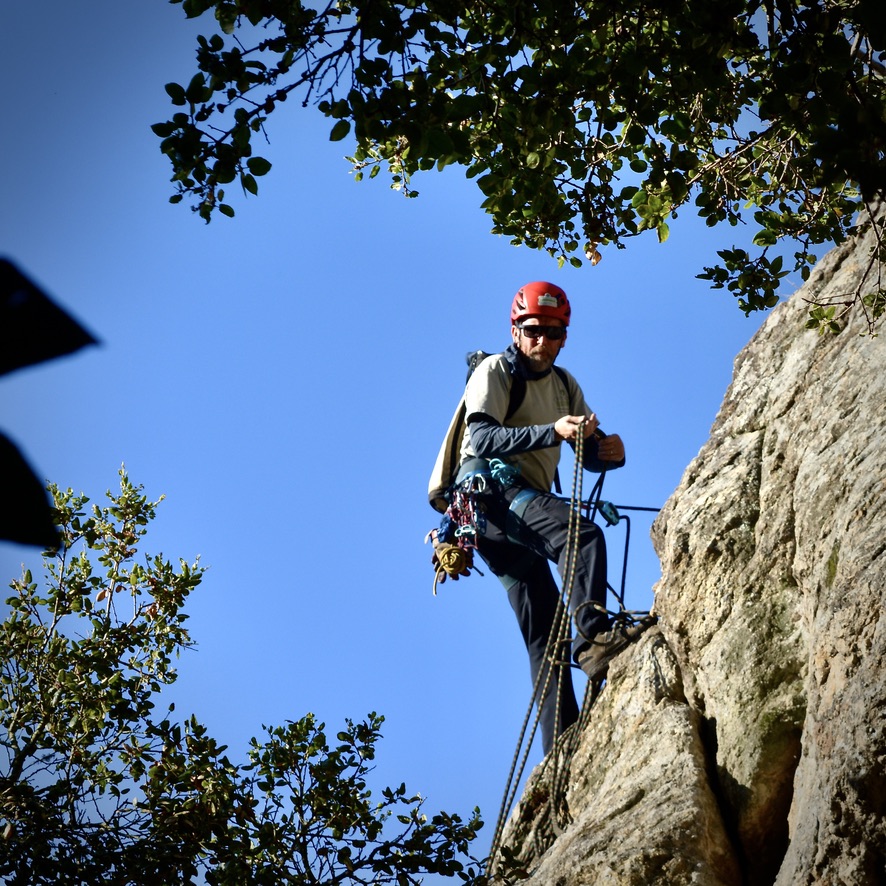

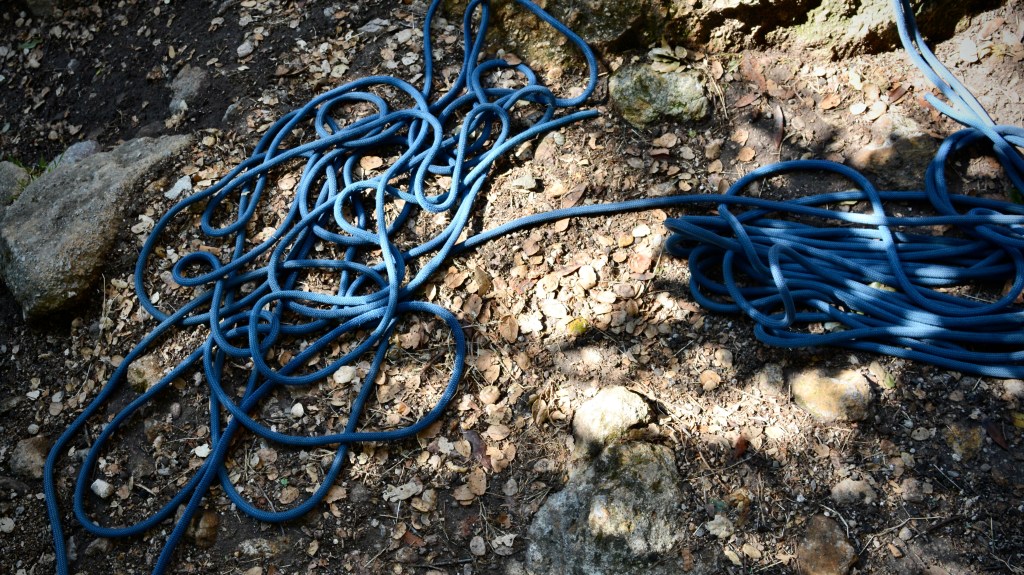

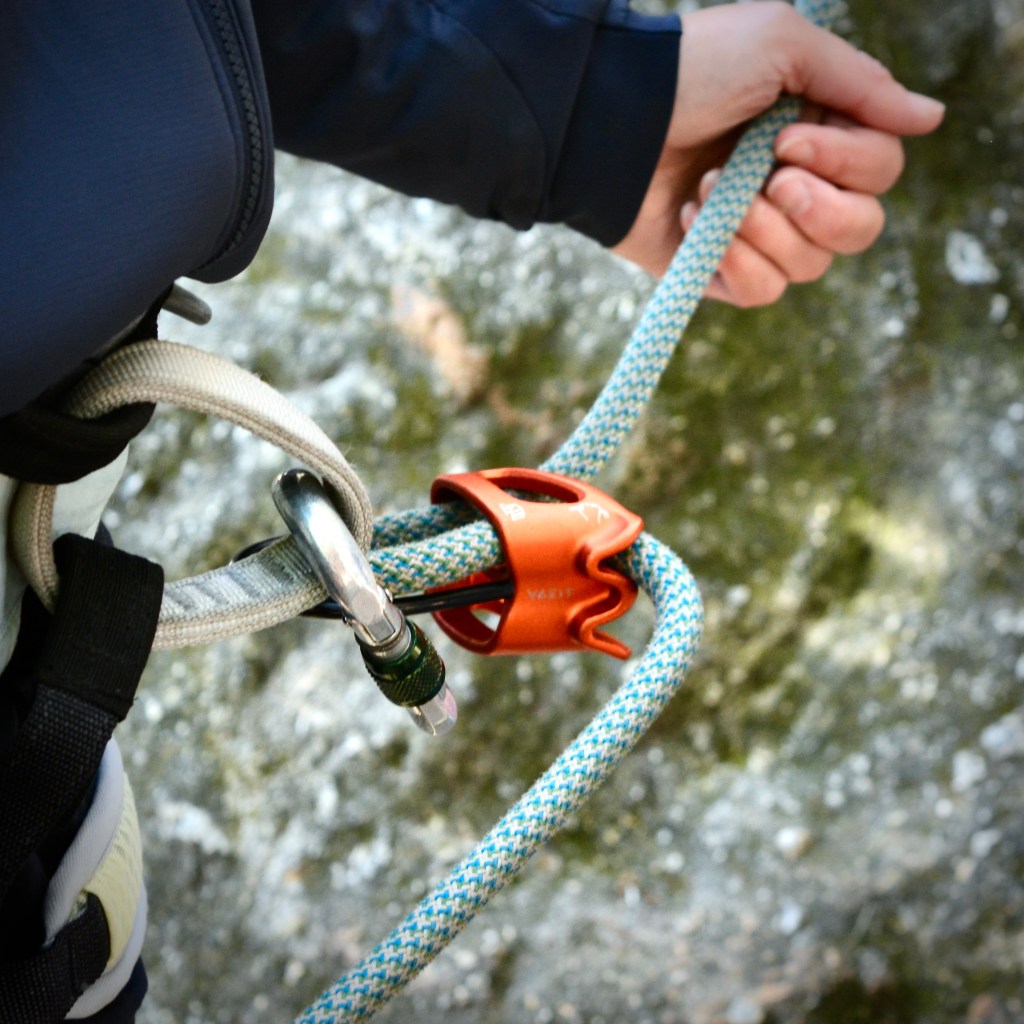
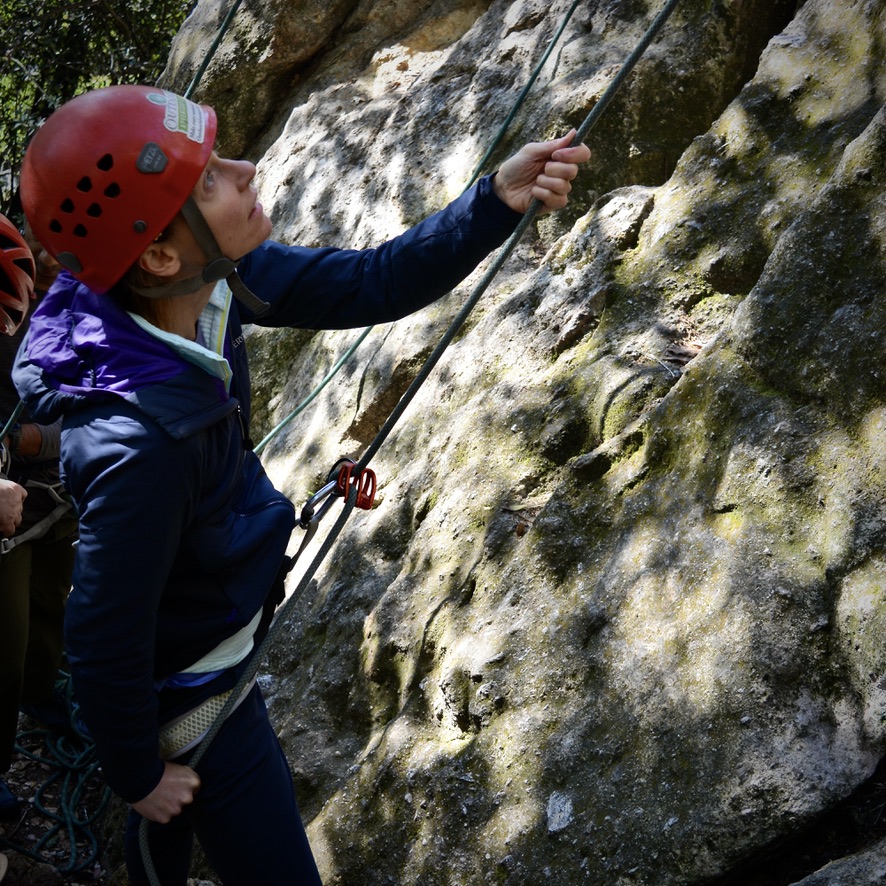

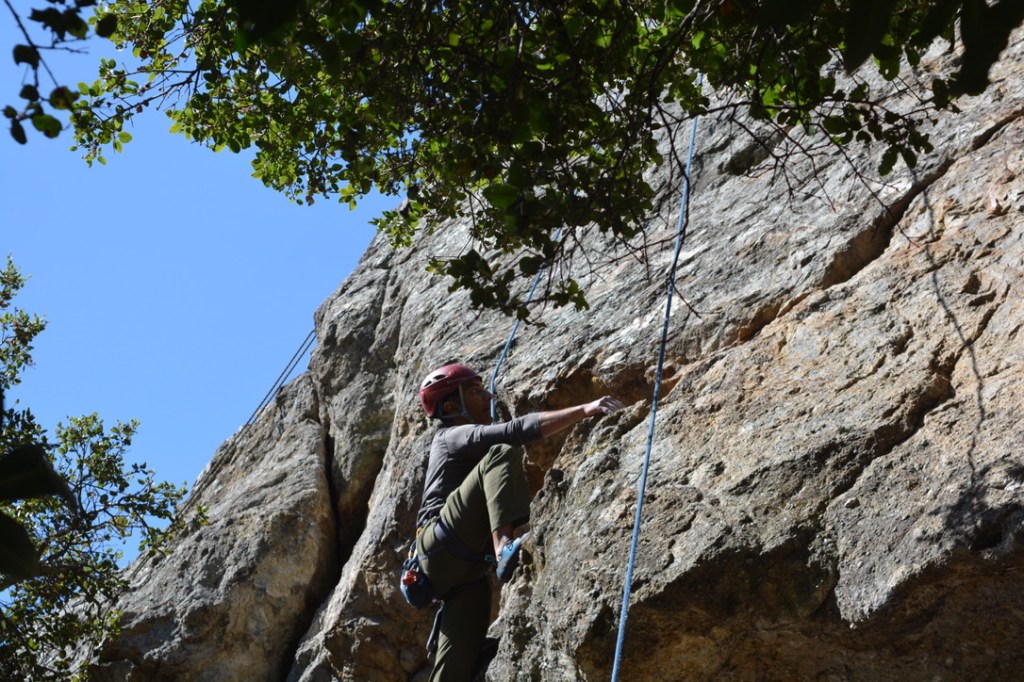
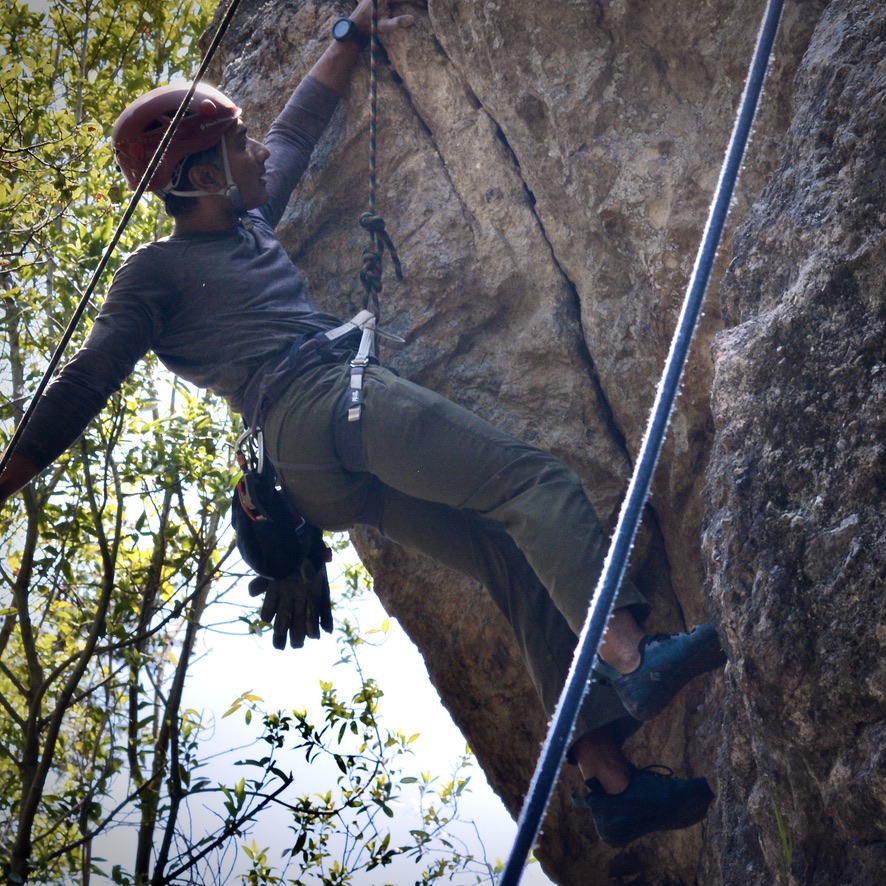
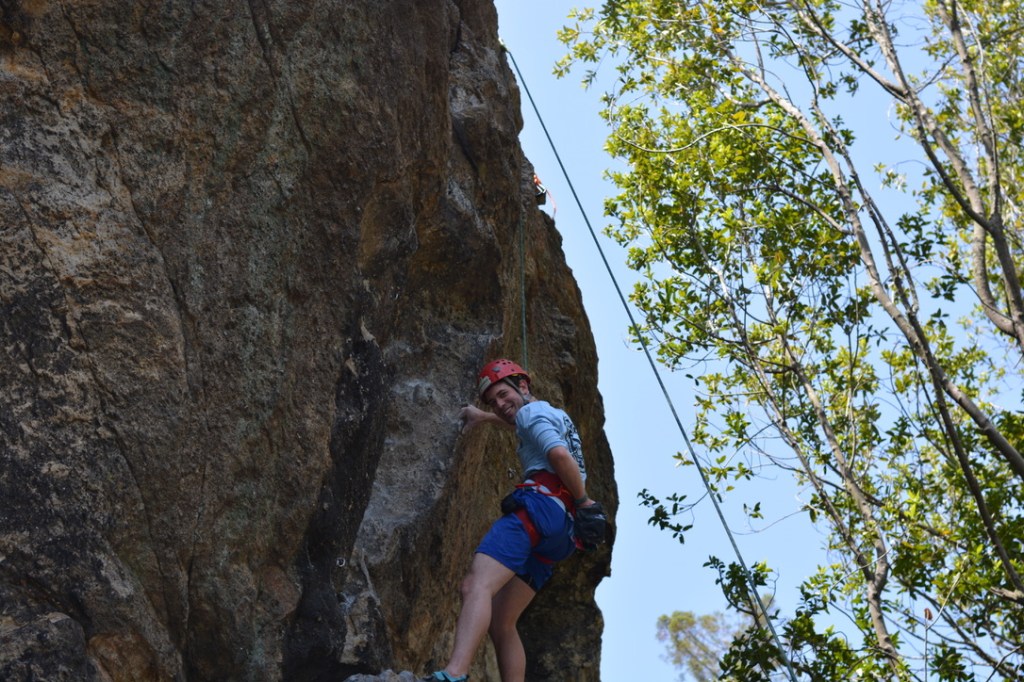
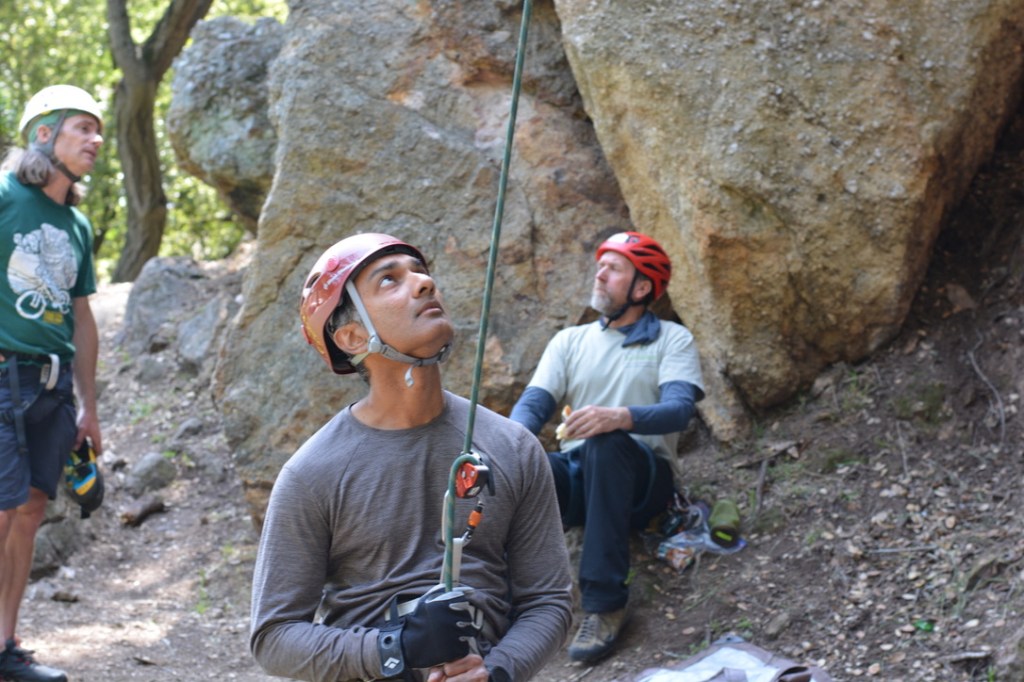
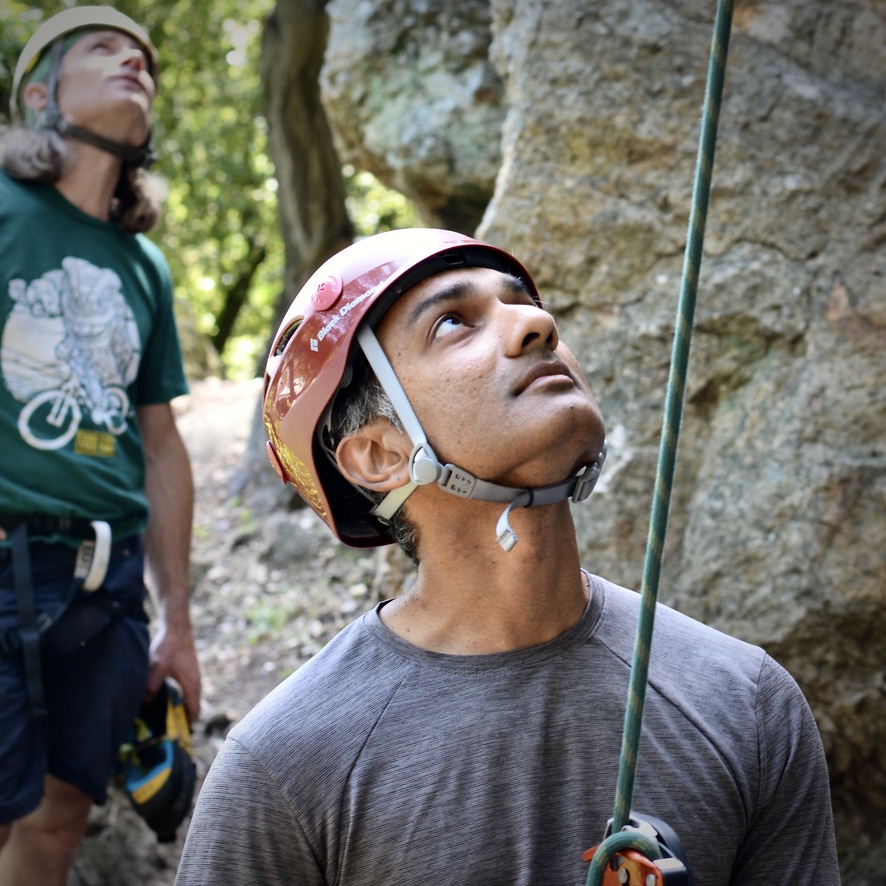

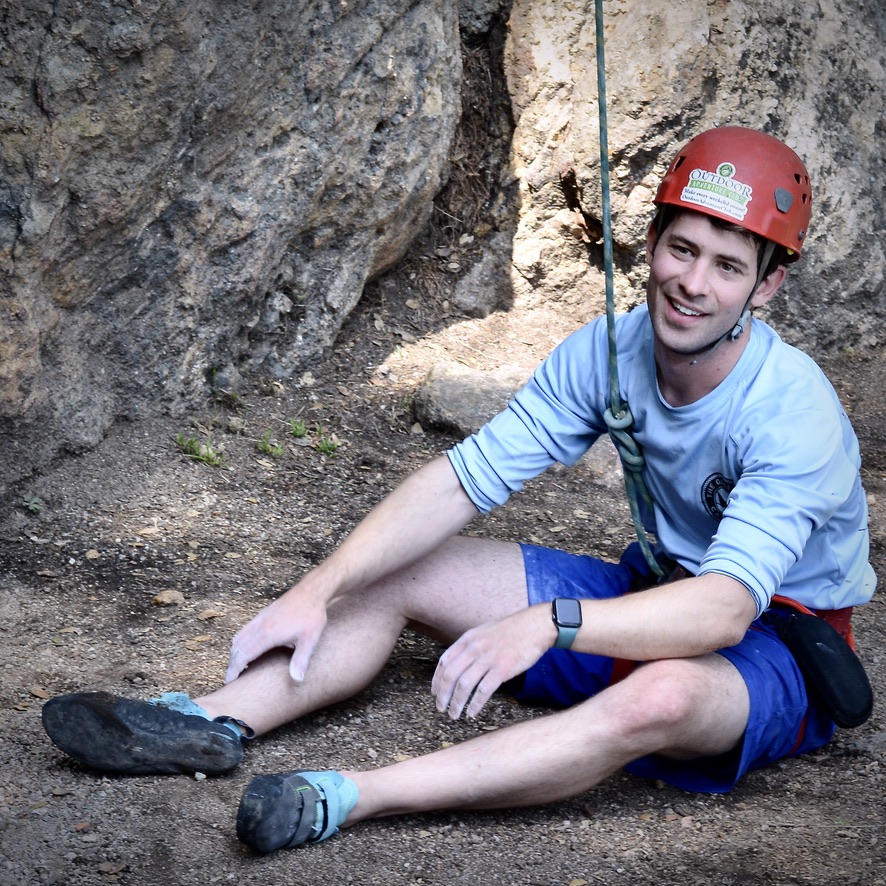
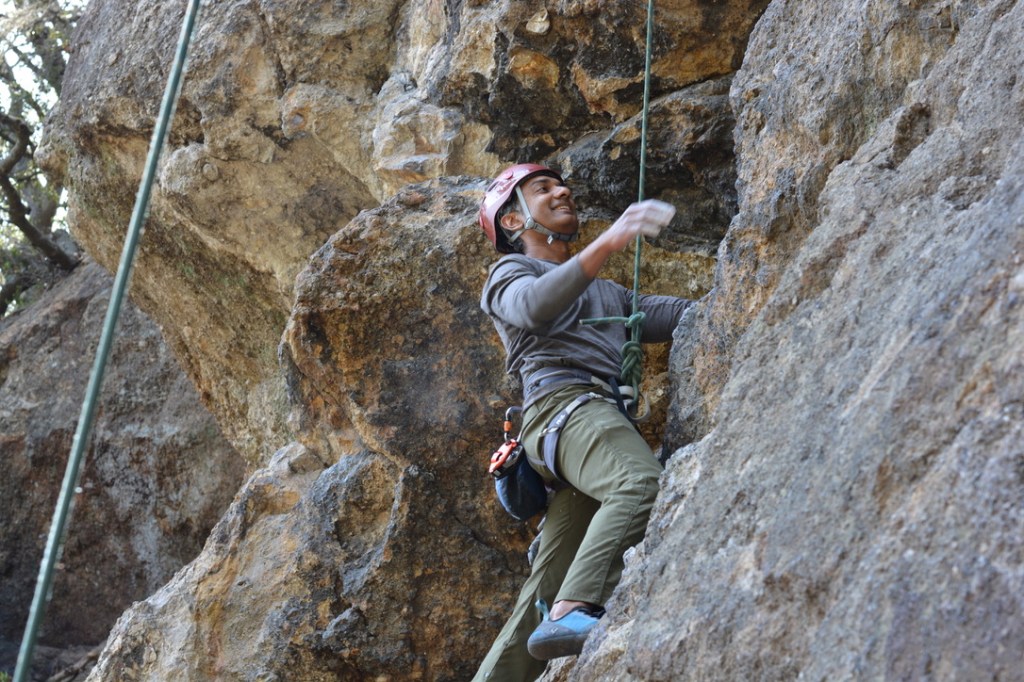
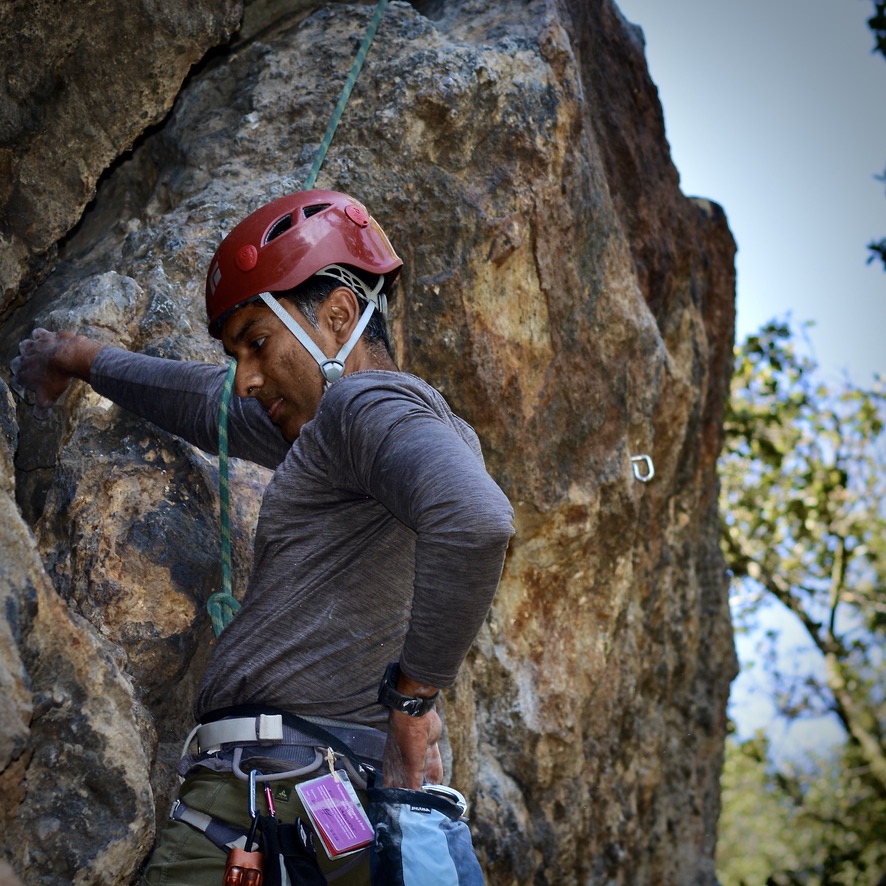
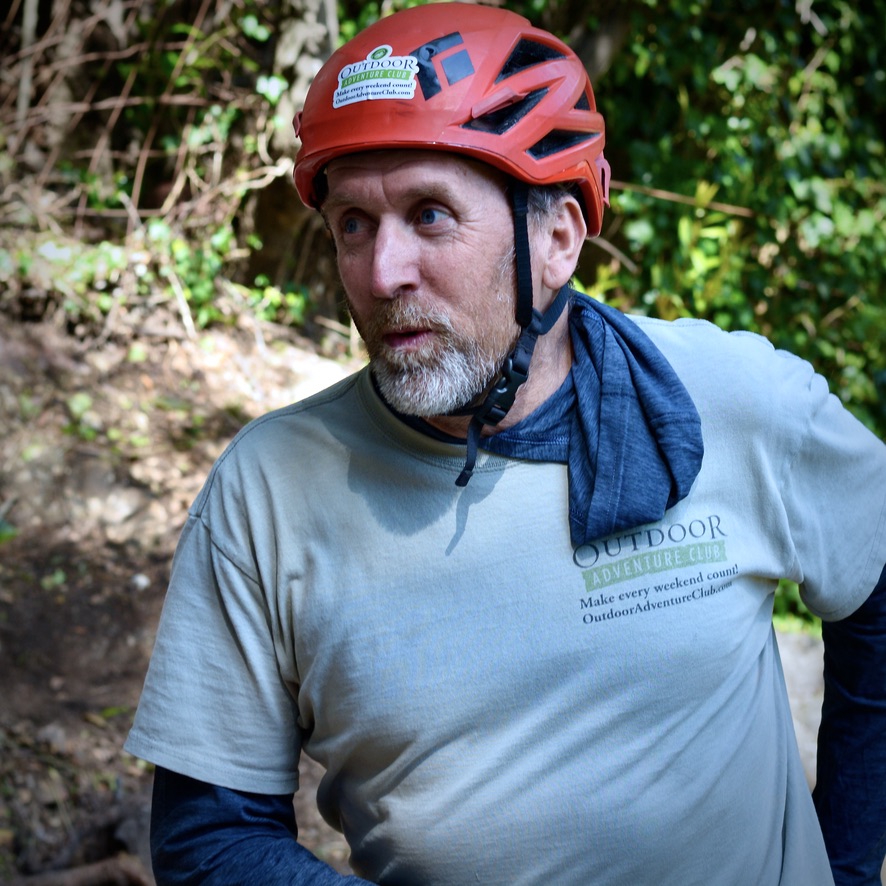
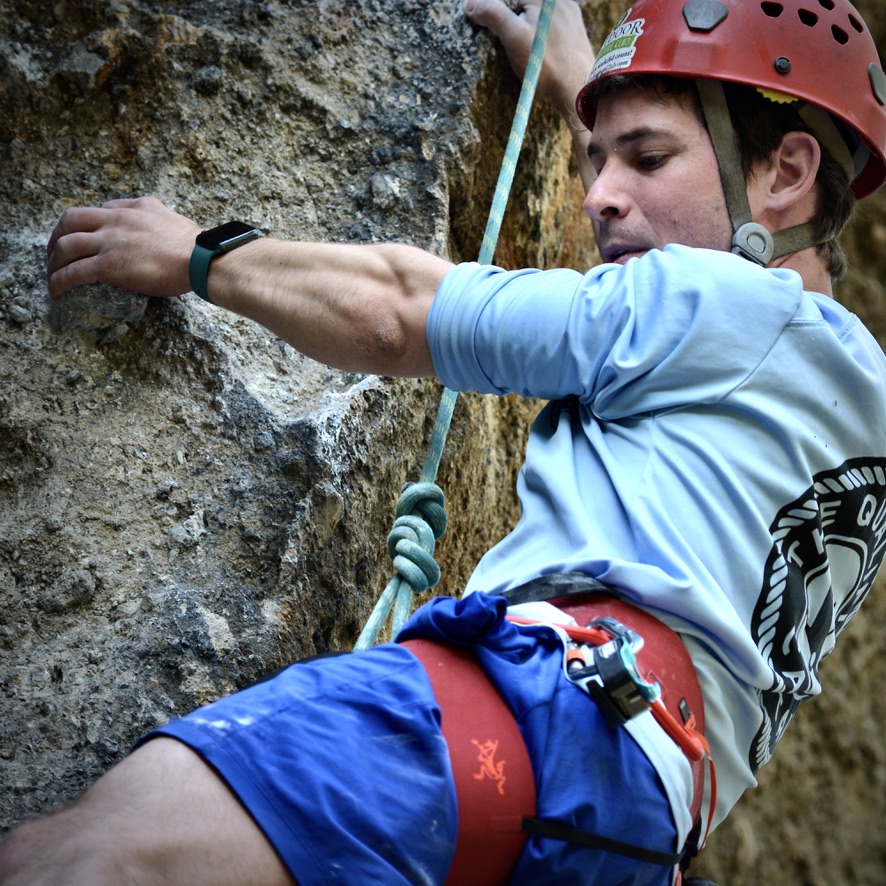
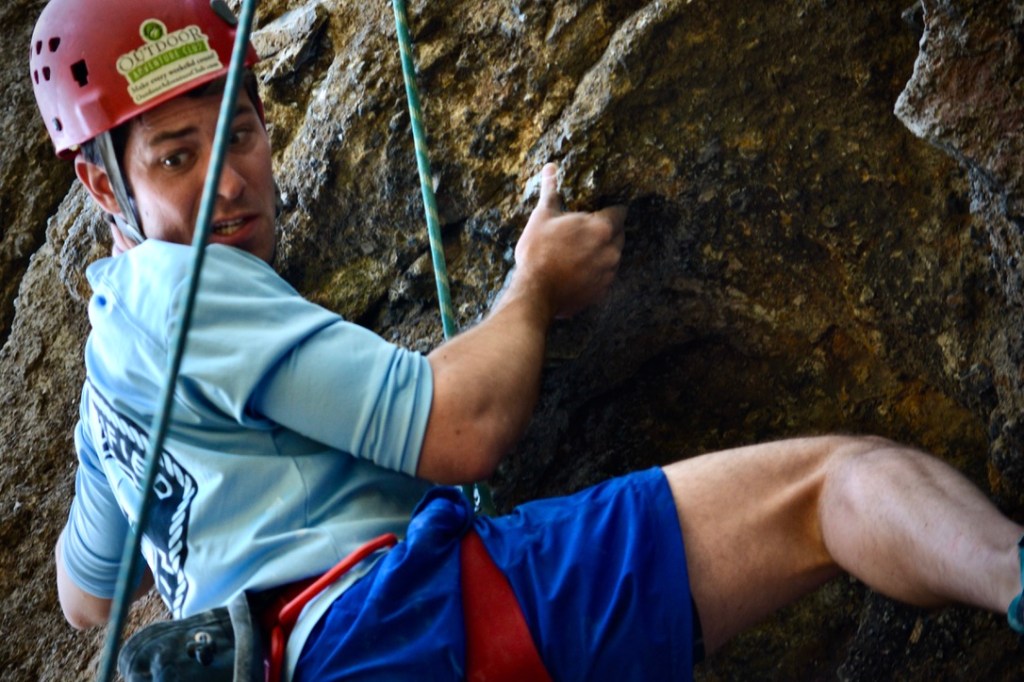
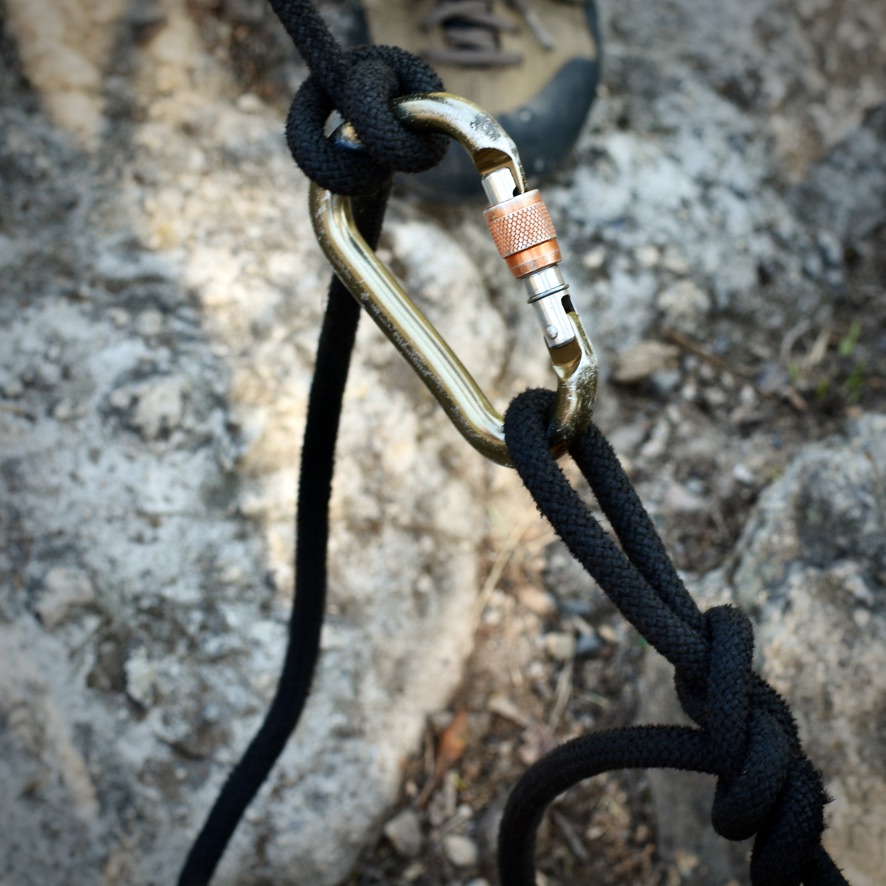
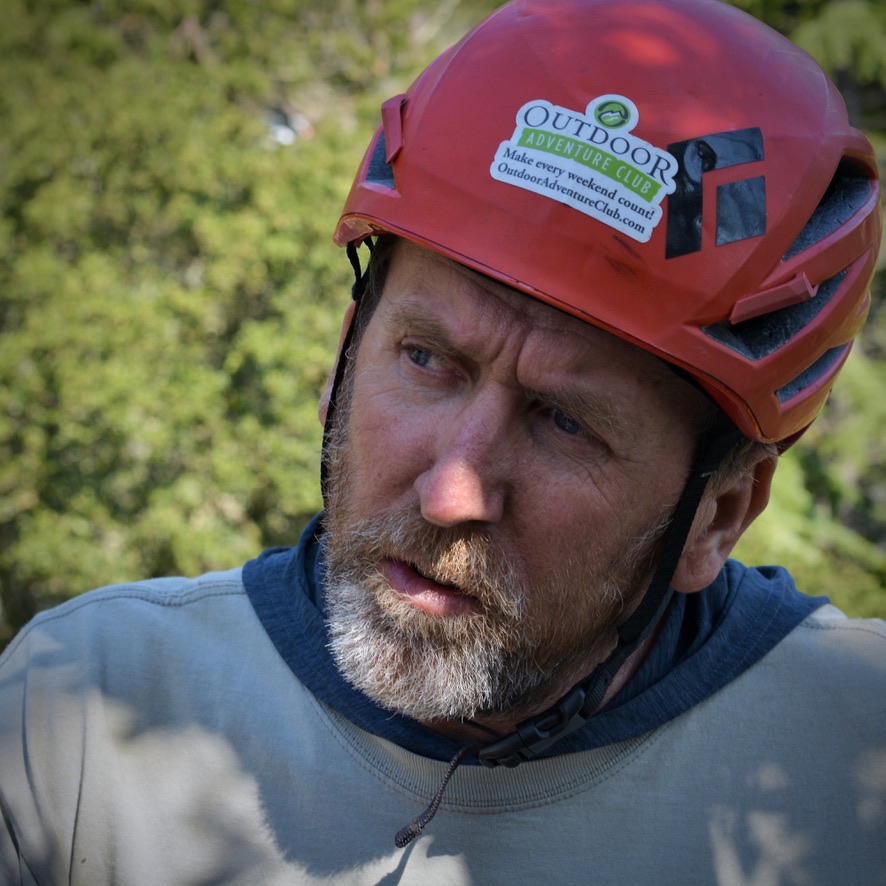
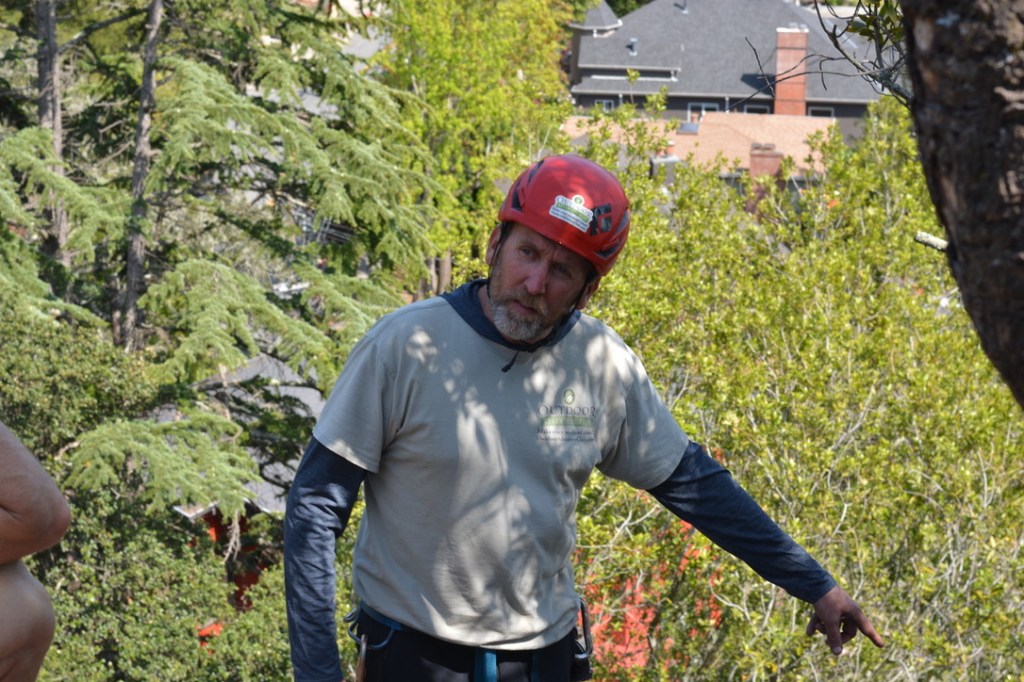
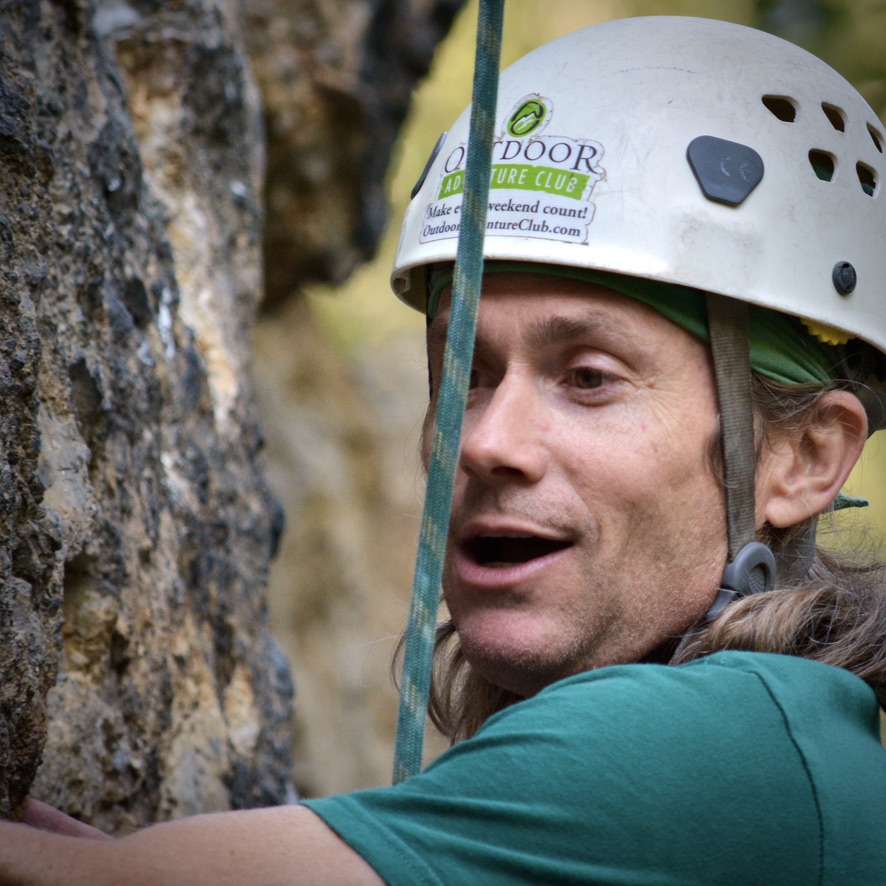
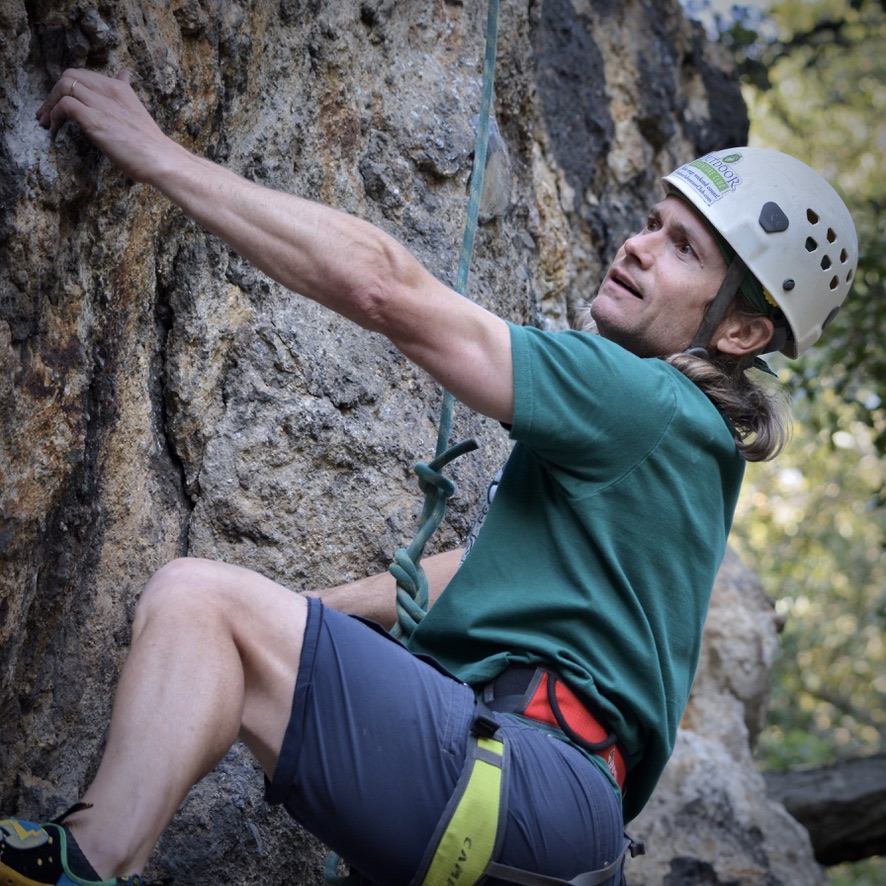
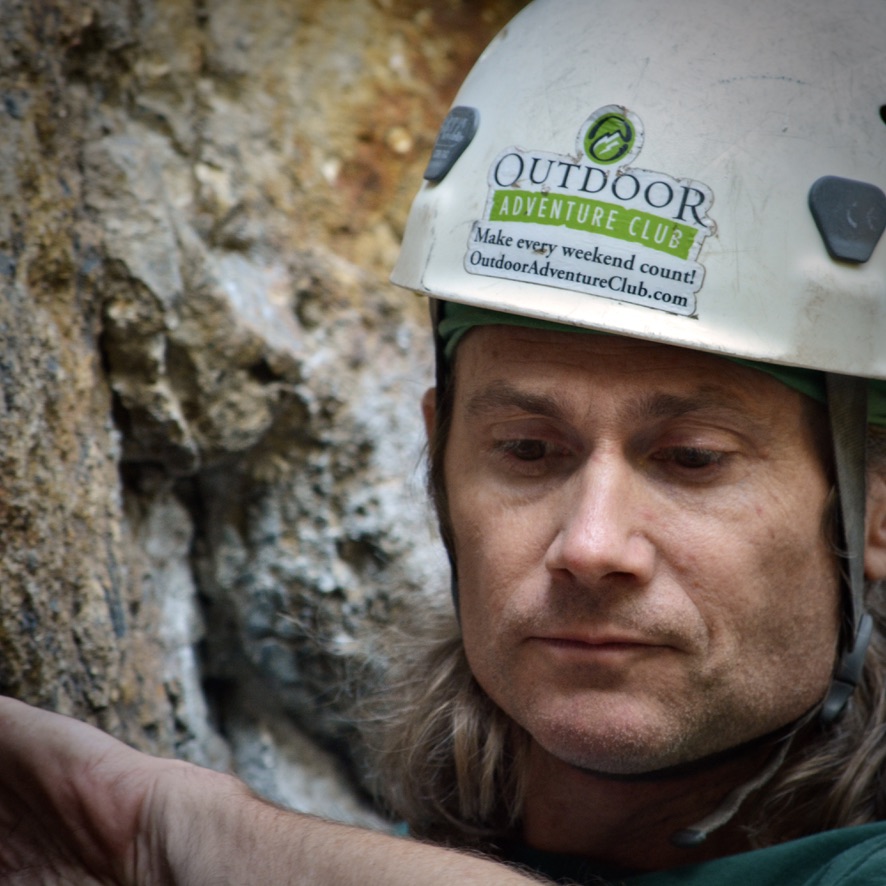
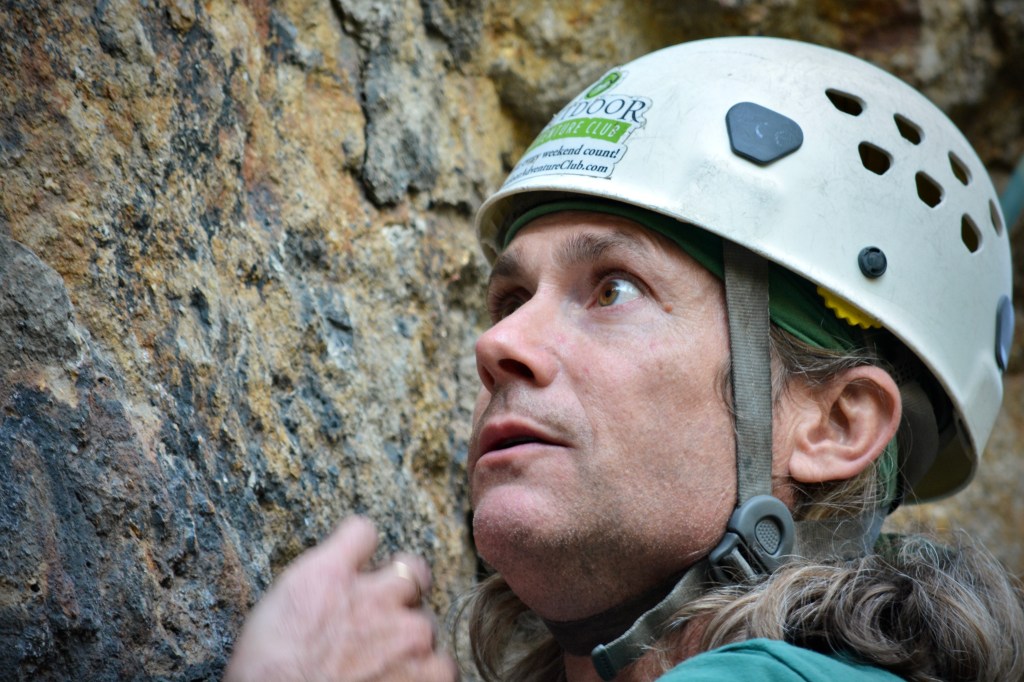
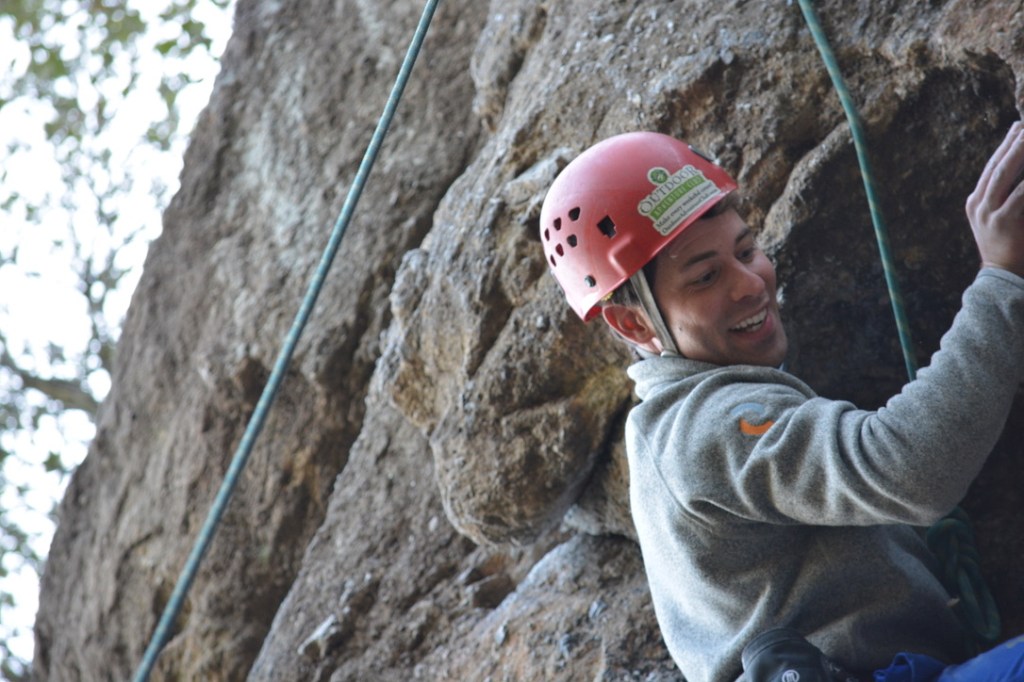
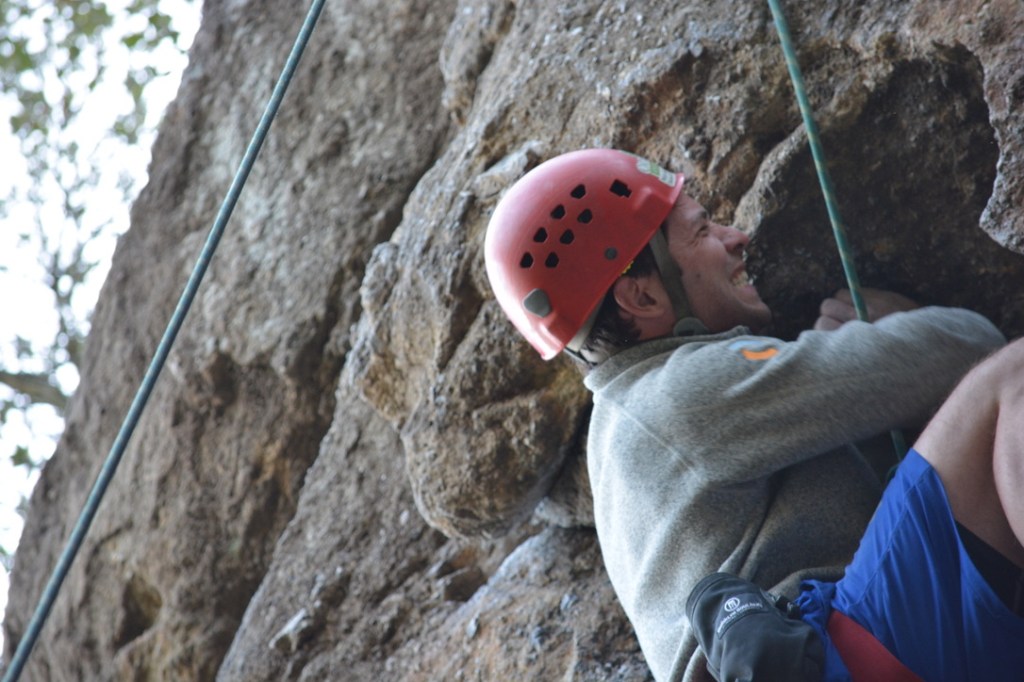
Once we were all confident in our knots and technique we hit the rock.
The most difficult part for me wasn’t the actual climbing. It was learning to trust the rope, the gear and my partner. And as I thought about it I realized they could be rolled up into learning to trust myself to assess those factors.
The realization really hit me on my second or third time up an easy route. As is typical of beginners, I asked my partner to keep tension on the belay and when it felt precarious I instinctively reached for the rope as opposed to focusing on the rock.
When I reached the top of the route, to supportive cheers from others in the group, it was time to release from the rock so my partner could lower me.
Still scared of falling I gingerly pushed off from the rock, as if being tentative would somehow make gravity not work, and was totally suspended by the rope.
As much as I wanted to enjoy the view my eyes were focused on the knot I’d tied earlier and that was now critical to holding me about 30 to 40 feet above the ground.
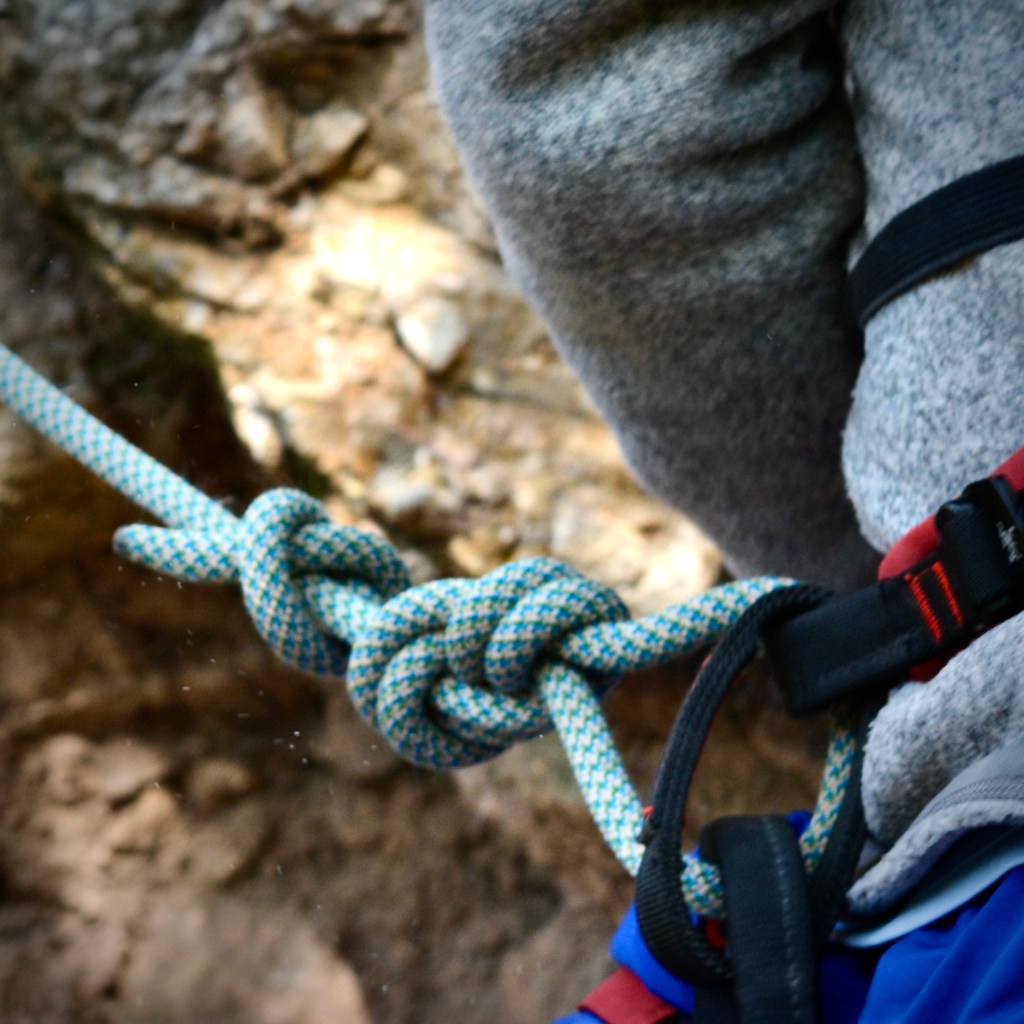
The knot was holding, which is no surprise considering I tied and double-checked it faithfully. What caught me off guard was an ominous creaking sound from the knot and rope. Even though I knew the knot was fine I hadn’t been expecting the sound.
I took a moment for a couple controlled breaths and then listened to the rope, looked at the knot and up at the anchor.
Everything was good.
And even if it wasn’t, it was too late to do anything different at that point.
I took another breath. Listened to sounds of my supportive teammates.
Then I looked out to enjoy the view.


 Occidental on Purpose
Leave a comment