Ranges in Central Nevada put the ‘backcountry’ into backcountry skiing
It’s been about 10 years since the first time I really saw people backcountry skiing from up close.
It was during a spring hike for a lovely waterfall picnic overlooking Lake Tahoe. The hike was below the snow line but along the way we saw a group of three people with skis on their backs.
They were headed up the trail toward the snow and the whole notion immediately captured my imagination.
The idea of foregoing everything that comes with what we Americans think of as a ski resort had so much appeal.
It didn’t even matter that I had never skied outside a resort and it had been years at that point since I had even really done much skiing.
I decided right there that was how I wanted to ski.
And in the near-decade of trial end error — mostly error — since the place where skiing comes closest to what I imagined it could be on that Tahoe trail is the ranges of Central Nevada.
With more than 300 named ranges, Nevada is the most mountainous state in the U.S.
But if you polled skiers I’d be shocked if the state cracked the top ten as a favorite ski destination, aside from the small corner of the state that shares the Lake Tahoe Basin with California.
Drive West-to-East across Nevada on U.S. 50 in the winter and you can count off the snow capped ranges as you traverse them: Clan Alpine, Shoshone, Desatoya, Toiyabe, Toquima, Monitor, Schell Creek and Snake.
Take a northern route in the same direction and you’ll see the Santa Rosa, the Independence, the Ruby and Jarbidge ranges.
To the south Nevada shares the Sweetwater and White ranges with California and is home to the Wassuk range.
Combined, these ranges stretch hundreds and hundreds and hundreds of miles. Also combined, they probably see fewer skiers in 10 years than the biggest Tahoe resorts see in a few busy weekends.
This brings me to what I came here to write about. A recent weekend skiing in the Toiyabe Range.
With a population of about 100 people Austin, Nev., is the seat of Lander County and the biggest community in the Toiyabe range. Austin also marks the northern end of the range.
From there the Toiyabes stretch south for about 100 miles into neighboring Nye County.
Arc Dome nearer the southern end marks the high point at 11,788 feet.
And in between Austin and Arc Dome there are numerous peaks reaching 10,000 and even 11,000 feet.

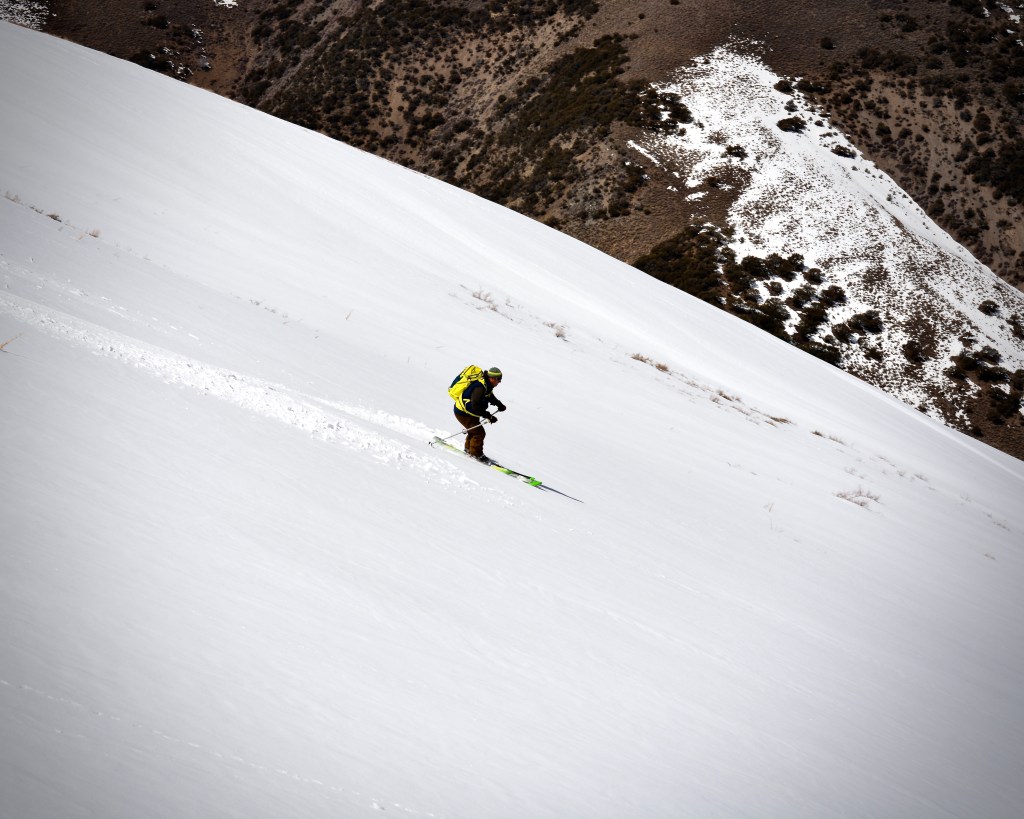
Our trip in early April was the second time I’ve skied in the Toiyabes. And neither time have I seen another skier or even another ski track.
Like so much of the western U.S., Central Nevada is enduring a severe drought and snow conditions were sparse when we arrived.
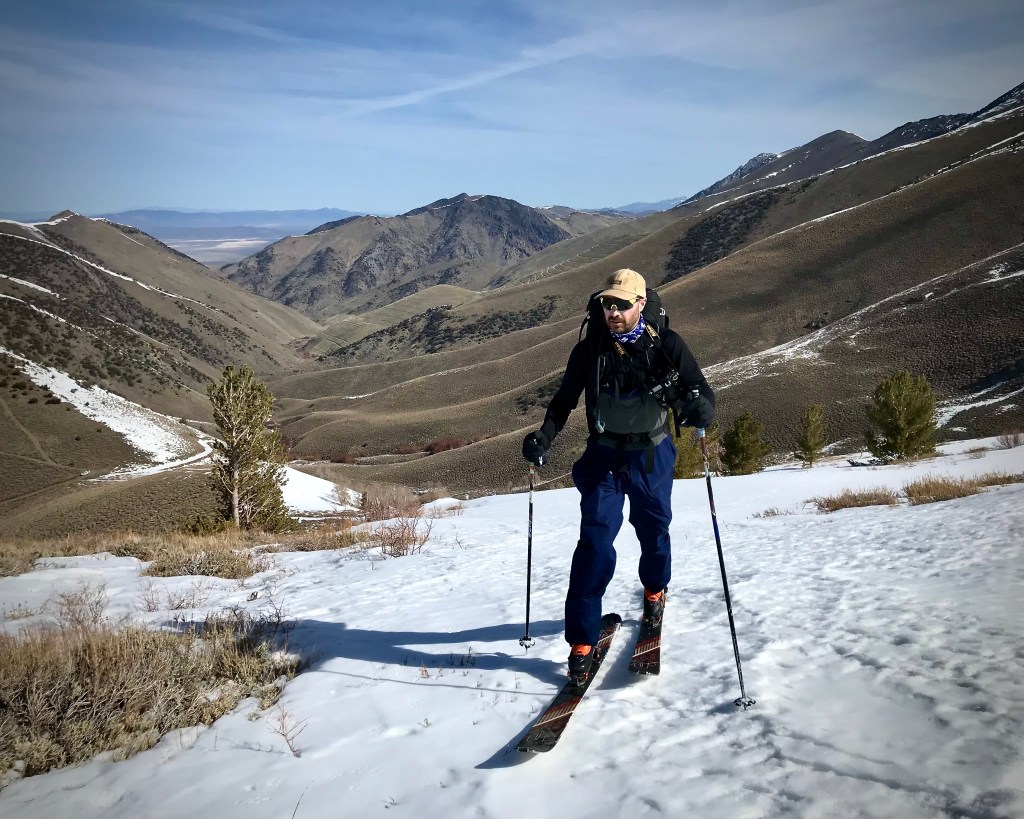
Still, north and east facing aspects were holding enough snow for skiing. And due to the light snowpack, we were able to drive deep into the range to look for opportunities.
We camped two nights near the small town of Kingston and had two days of skiing.
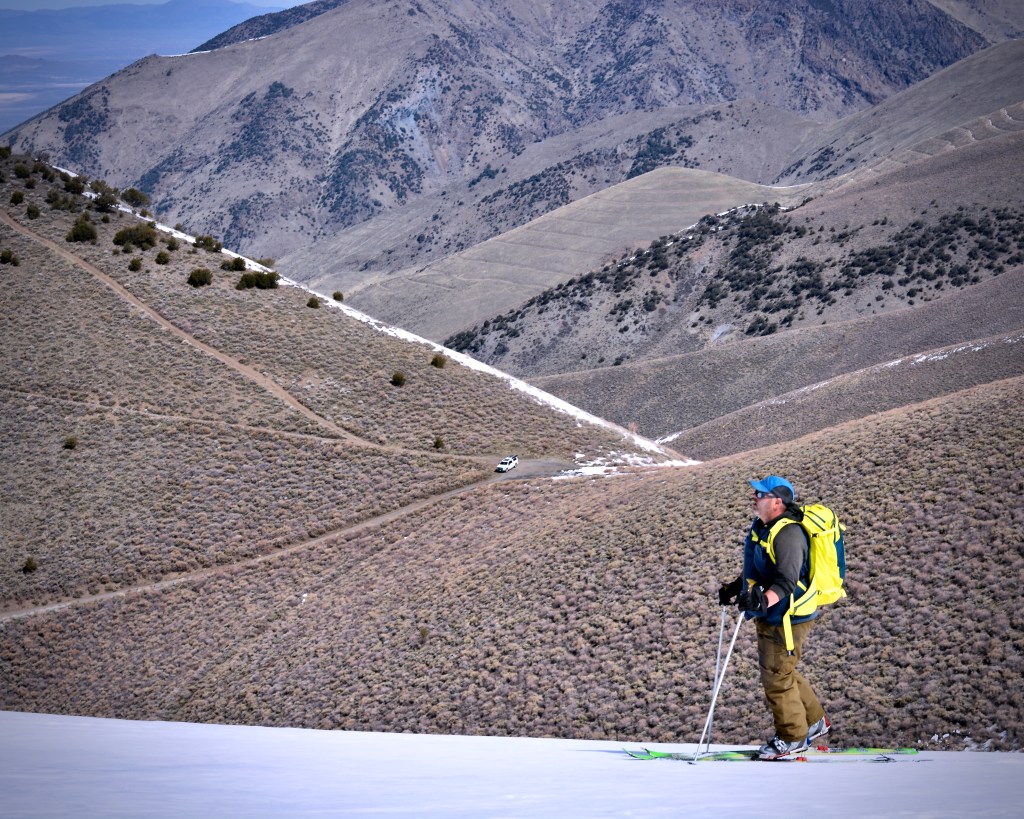
From our campsite we were able to drive up a dirt road until we reached the snow line which coincided with the top of a high mountain pass.
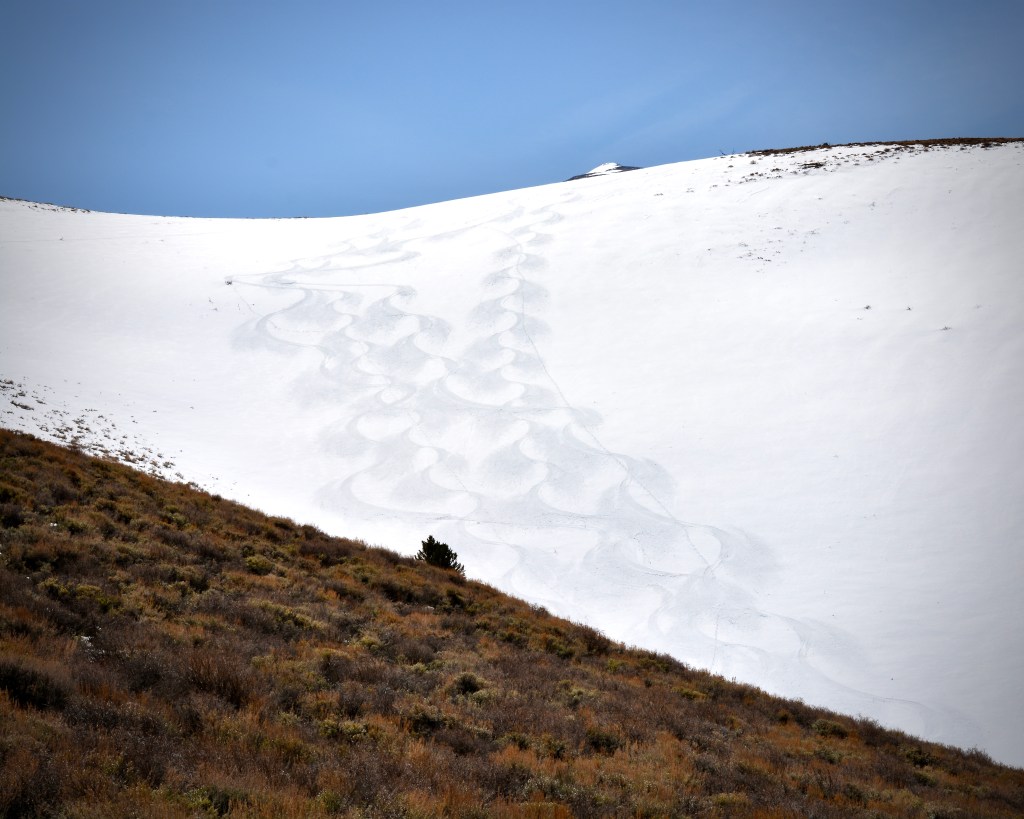
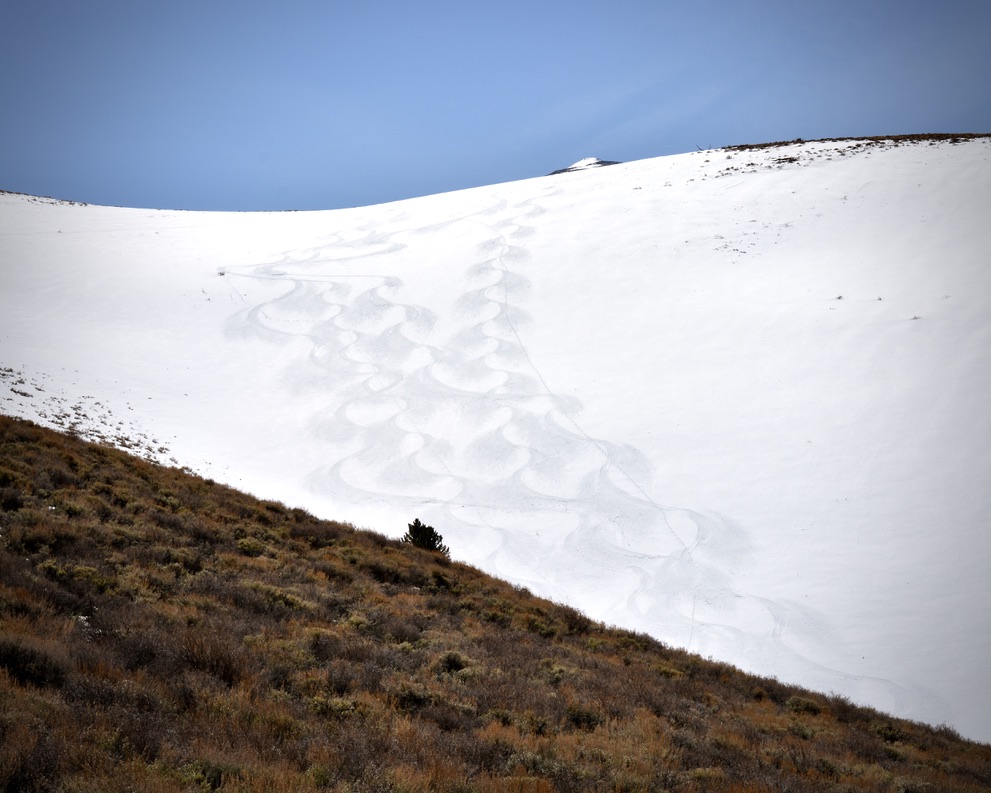
From there it was short hikes up to find some fun, reasonably long descents on snow that was incredible for the few hours between the times it unfroze from the night before and got too mushy in the afternoon sun.
After the first day skiing we returned to camp for spicy ramen stir fry and to relax before the sun went down.
It was around then it struck me that this is the reason backcountry skiing captured my imagination so many years ago.
This being the idea that you can take an incredible activity like skiing and dump all the baggage it’s been saddled with in the process of becoming the cornerstone of what we now call the snow sports industry.
Dirt roads. Free camping. Big mountains. And enough snow to make some nice turns.
 Occidental on Purpose
Leave a comment