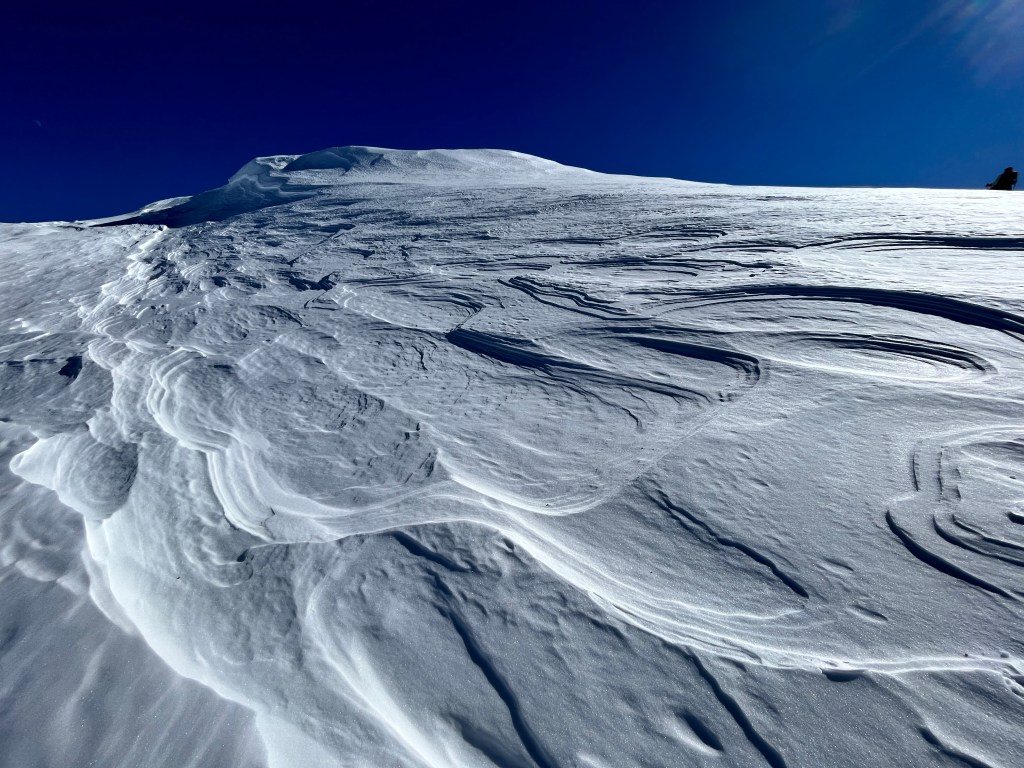
Waking up to fresh snow typically puts a little spring in my step.
Even on days when I’m not skiing it’s nice to be outside early when the city sounds are muffled by a new layer of snow.
I like tugging my winter boots onto my feet and heading out to shovel the walk. It’s a refreshing way to start the day and makes my morning coffee feel like a special treat.
And on ski days the sidewalk shoveling is a nice warmup before heading into the mountains to enjoy the calm of skis moving silently through powder and snow-covered trees creating acoustics reminiscent of a music studio.
But today wasn’t typical. Waking up to fresh snow was a bit of a disappointment.
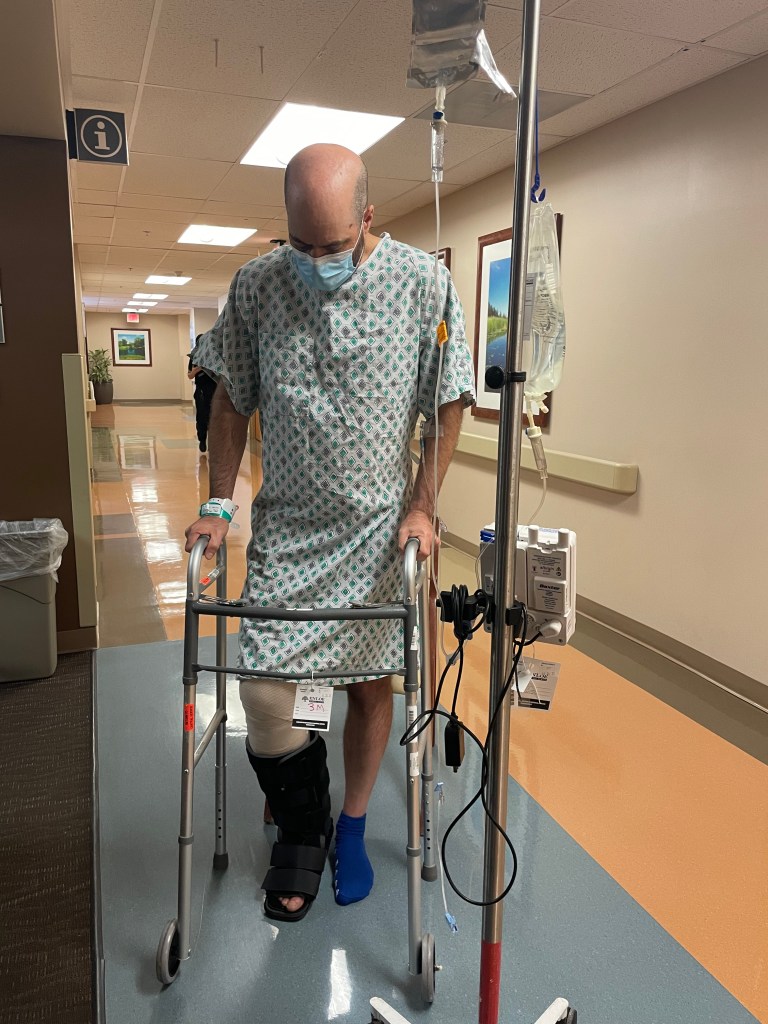
That’s because today I’d been planning to walk around outside for the first time since I broke my leg backcountry skiing two weeks prior.
The pain and swelling in my surgically repaired, lower right leg has been steadily decreasing and my mobility increasing and today, with a day off from work, I’d been hoping to take my walker outside to move about the neighborhood.
Steps and sidewalks covered in snow and ice aren’t a great environment for safely using a walker.
But rather than wallow in what I can’t do today I’ve decided to use the time to recount the experience of my injury and the immediate aftermath.
While I’ve jotted down some notes here and there this is the first time I’ve actually sat down with intent to relive the entire experience.
The injury occurred during a guided, backcountry ski trip at Lassen Volcanic National Park which is located in portions of Shasta, Lassen, Plumas and Tehama counties in Northeastern California.
The namesake feature, Lassen Peak, is a plug dome volcano that extends about 10,457 feet above sea level and represents the southernmost volcanic peak in the Cascade Range.
On the day of my injury my group skied out of the Kohm Yah-mah-nee visitors center parking lot, located near Mineral, Calif.
Kohm Yah-mah-nee was already familiar to me because I’ve used it as a staging area for prior, non-guided Lassen ski trips.
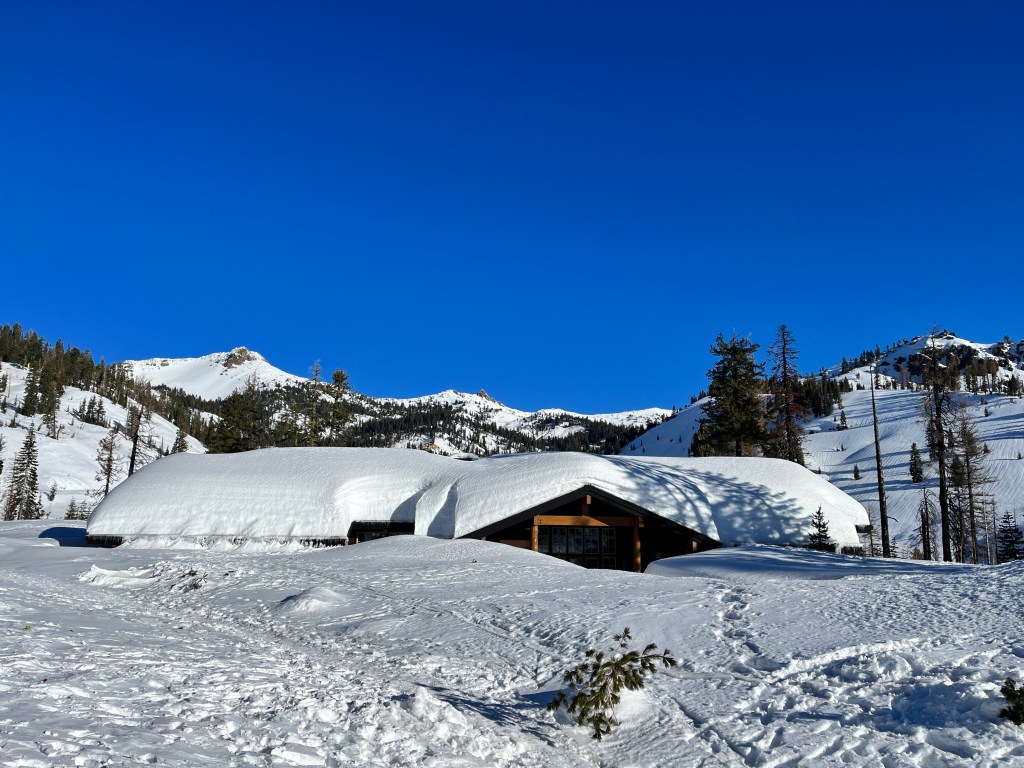
The park service allows parking lot camping during winter and offers heated restrooms with potable water 24-7, making it affordable and convenient for weekend ski trips.
Our trip included guides Sean and Emily, and, I think, eight or 10 skiers, including myself.
It was a great group of people, the weather was expected to be sunny with temperatures in the low to mid 30s at around 8,000 feet with gusty winds in the teens.
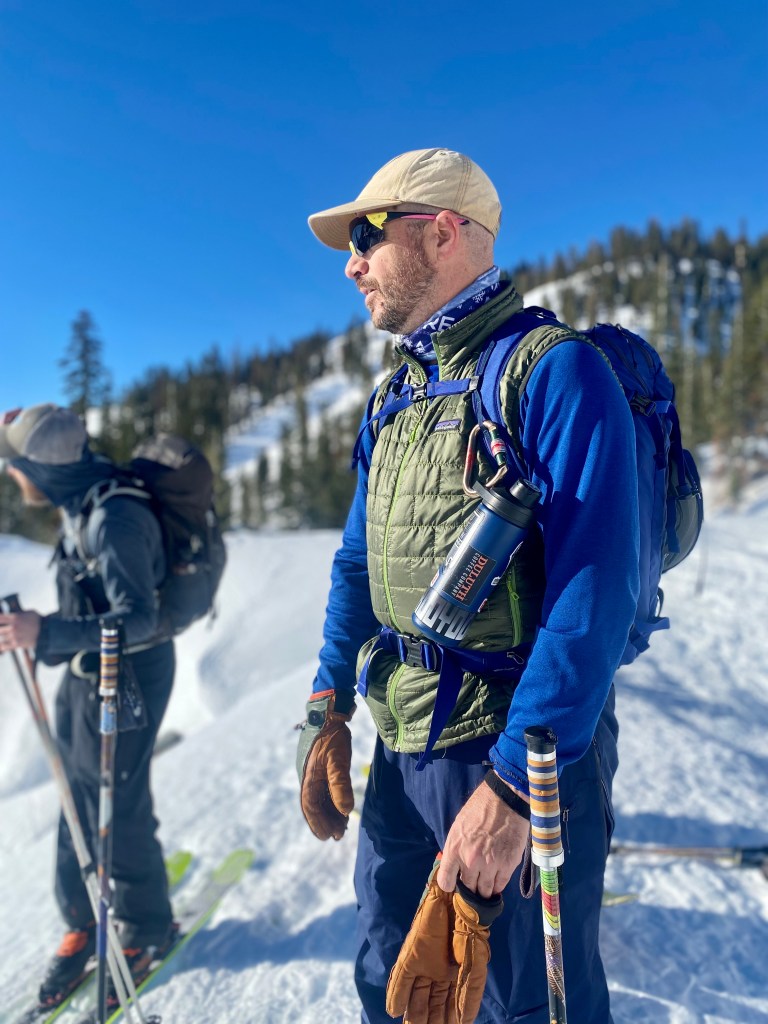
While the snow was deep, it had been some time since the last snowfall and strong winds from myriad directions in recent days had blown snow in seemingly every direction, making for mostly firm conditions with pockets of windblown powder.
Limited by conditions, our plan for the day was to make a roughly four to five-mile round trip with about 2,300 feet of elevation gain. It would be either a loop or an out-and-back depending on where we found skiable snow.
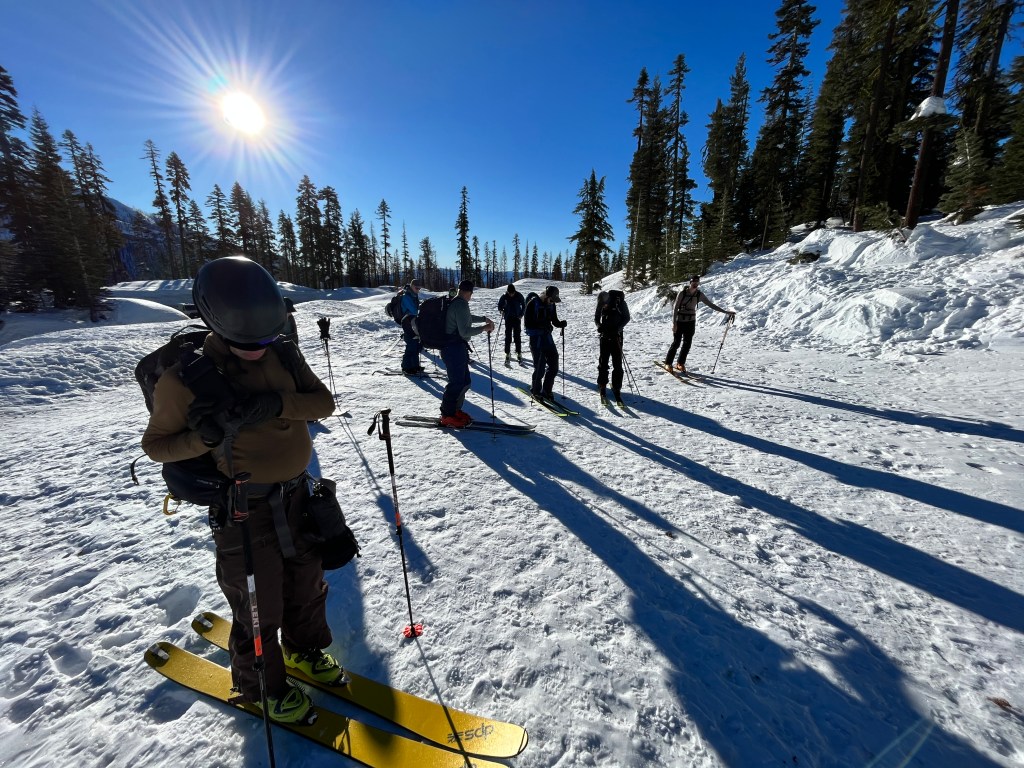
Our target zone was a lovely, open bowl I’ve skied several times before. Although it was familiar, I was happy to return because it’s among my favorite ski zones. The guides, in my view, would add to the experience with their knowledge of the park, their ability to offer some impromptu beacon search training and for safety – the latter turned out to be prescient.
We departed the visitor center on skins, moving up the road toward the Sulphur Works, a sulfurous hot spring and popular attraction for sightseers.
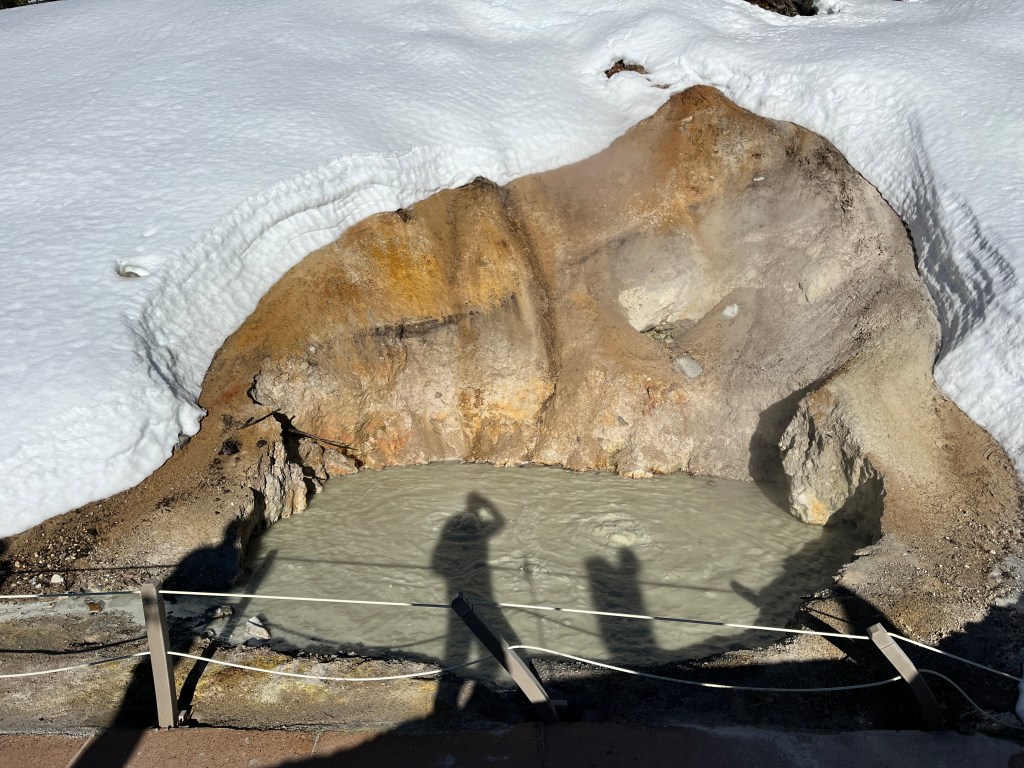
After we turned away from the road we climbed into the mountains heading for our ski zone. Along the way we stopped for beacon practice.
When we arrived at the base of our target zone the snow conditions remained firm due to the wind and despite plenty of sunshine.
It was firm enough that I decided to use my ski crampons for our climb to the top of the bowl.
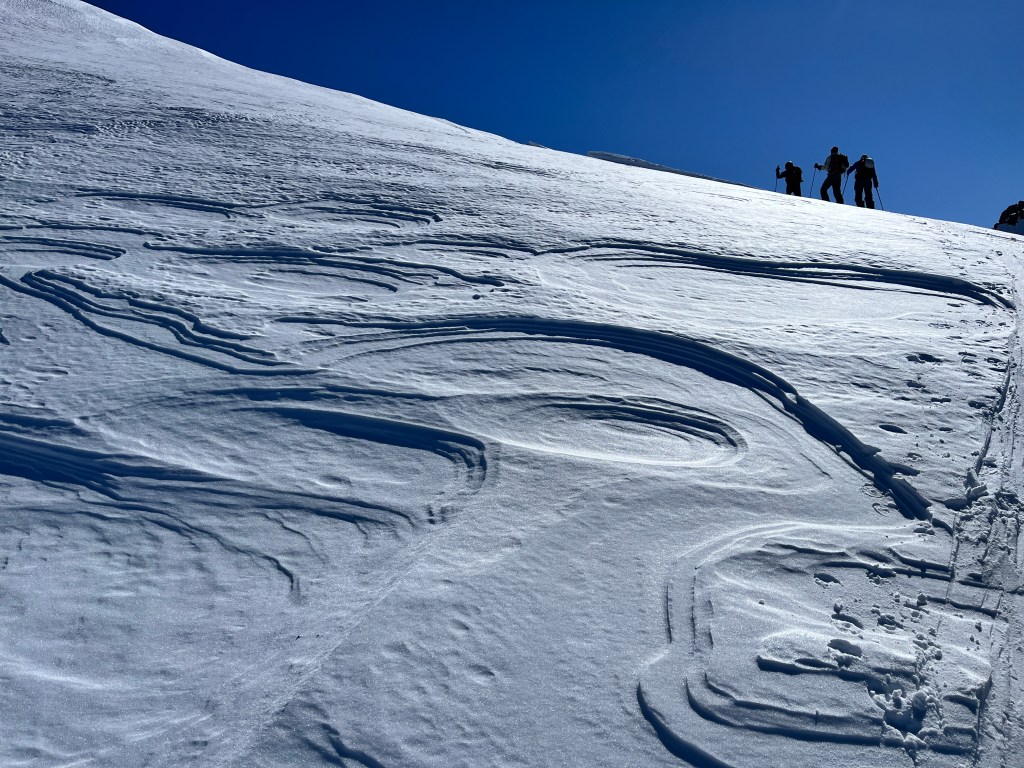
Upon reaching the top of the bowl we ascended further to a rocky knob at about 8,400 feet for lunch and views.
After lunch the snow in the bowl was still firm so the group decided to return via an alternate, ridge line route where we could continue to enjoy great views while looking for zones with skiable snow.
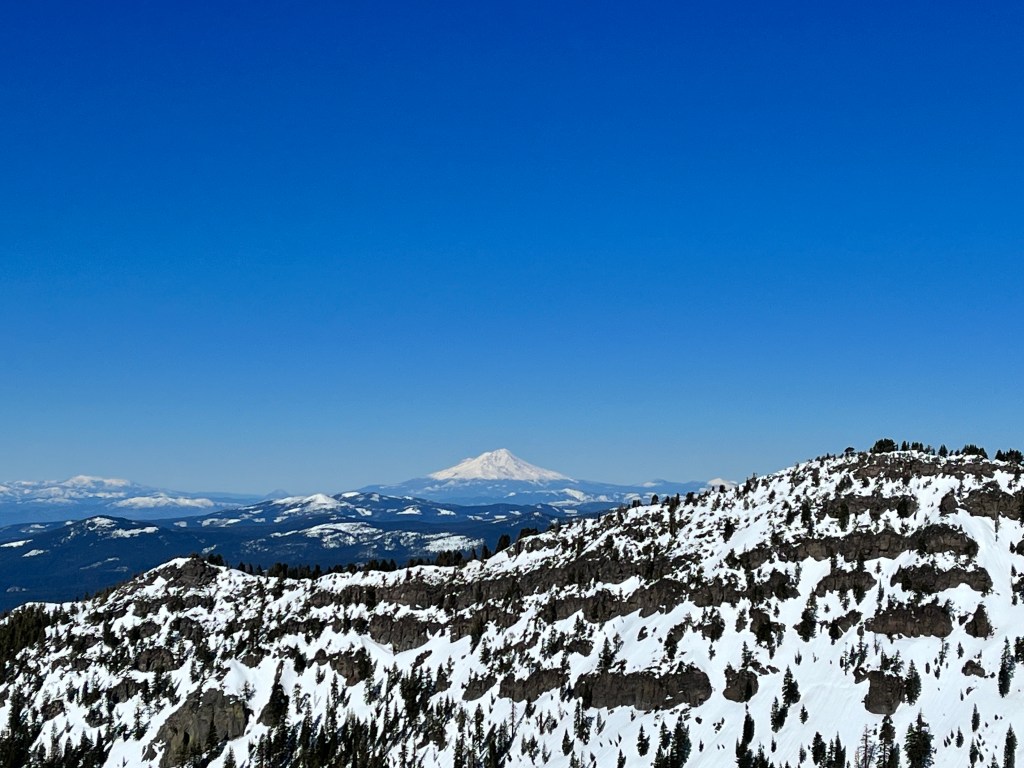
Eventually, we reached a zone holding enough windblown powder to get a few hundred vertical feet of good turns.
Since the day to that point had been more touring than skiing, everyone was grateful for the turns. With plenty of daylight remaining we decided it was a good place to stay and do laps.
After three to four laps the sun was getting lower and it was time to ski back to the visitor center.
The route would take us along a ridge until we reached a gully we could ski several hundred vertical feet down to the road.
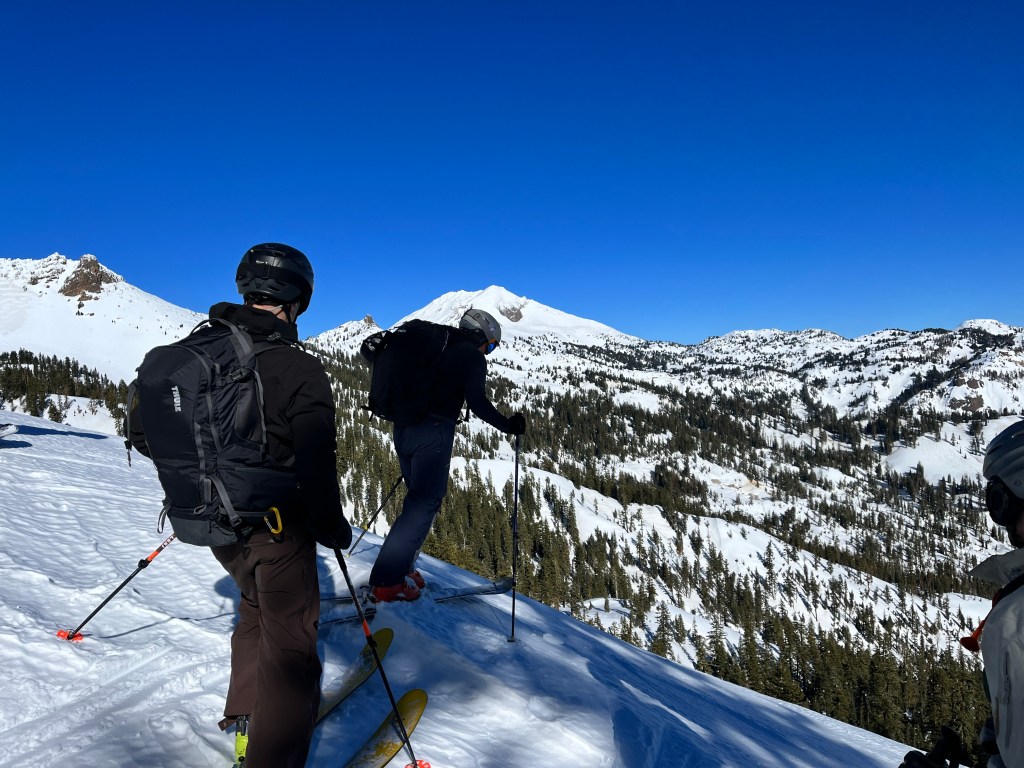
When we reached the gully some of us skied along the left side while a few others the right.
I was on the left and it was rough going. The snow, which had softened a bit during the day, had refrozen in low light and turning was incredibly difficult.
It was so difficult, in fact, I had been side-slipping most of the way, thinking I could slip down to a better surface then ski to the road.
About halfway down, however, I noticed the right side of gully appeared to be holding softer snow. While I could have side-slipped toward the bottom of gully to shift to the right, I decided I could make a couple turns to access the opposite side.
It was, I think, my second turn when I caught an edge on my right ski and tumbled. As my boot released from the binding I felt something in my leg and suspected it could be an injury.
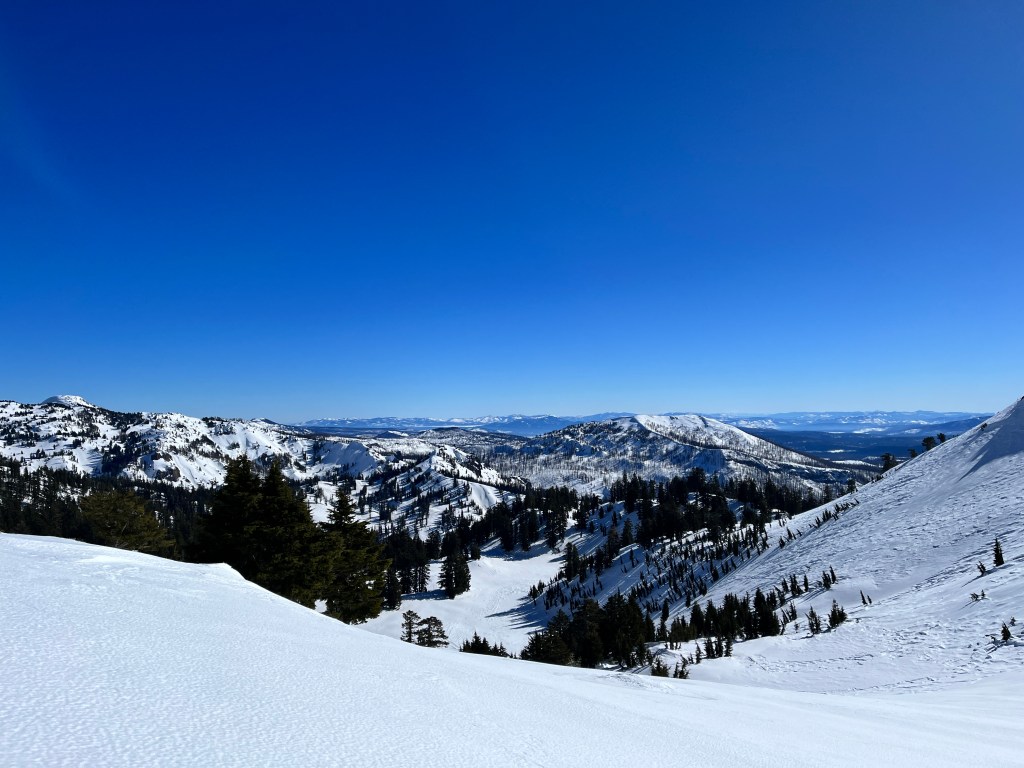
During my short slide I had enough awareness to turn my body so I could come to a stop with my feet downhill and head uphill.
Seated, I gathered myself for a quick assessment. I hadn’t hit my head or back, my arms were fine, my left leg was fine.
But I did notice pain in my right leg and while my left foot was perfectly vertical my right foot was turned a bit to the right.
When I couldn’t return my right foot to vertical I knew there was a problem.
Sean and a couple others were still uphill from me and had seen my fall. I shouted to them that I was hurt.
Sean was the first to reach me and quickly assessed the situation.
While we couldn’t see the injury, between my description and his observations we could tell it was likely a tibia-fibula fracture below the boot and which would require a splint and a transport.
Fortunately for me Sean, Emily and some of the other skiers were composed, prepared and ready to spring into action.
Some of the action here might be out of sequence because I’m writing off my memory of events.
But in my recollection, the group was doing three things simultaneously; splinting my injured leg, assembling the rescue sled and alerting authorities and a pre-established outside contact on our situation.
This portion of the rescue was the scariest time for me. I was worried about pending darkness, hypothermia and potential shock.
The good news is I was able to rely on some of my own skills to help myself.
Those included my own Wilderness First Responder and Outdoor Emergency Care training. That knowledge helped me continue to evaluate my own condition and it reduced my anxiety because I knew what the others were doing as well.
Not only was I able to follow along with the action, I was able to participate in helping my rescuers through providing materials from my pack and communicating on applying the splint and other actions.
Some other skills that helped came out of my mindfulness and meditation practice. Even though the situation was scary I managed through acceptance and depersonalization.
That line of thinking helped me stay active and engaged in the present as opposed to falling into self-pity or despair.
Ironically, I had just been thinking about my practice and wondering to myself if I could actually apply it in a crisis, or if I would become too overwhelmed to use the skills.
I was grateful, both in the moment and afterward, that I was able to remain engaged and focused on the task at hand.
It helped me cope and, I’m told, my teammates and rescuers appreciated my composure.
Once my leg was splinted the team loaded me into the rescue sled, essentially a fabric sled which used my skis as the structure.
They also remained in communication with their contact and authorities. It was around this time, I think, it was determined there wouldn’t be a need for a helicopter to pluck me from the hill but I might require helicopter transport from the visitor center.
With me in the sled, head downhill and injury uphill, Sean and Emily with some help from others in the group lowered me a few hundred vertical feet down the gully to the road.
From there they towed me down the road until they met some park rangers who were coming up the road with a larger, more efficient rescue sled.
The group moved me onto the sked-style rescue sled and from there the speed picked up, as the new sled slid much better on the snow surface.
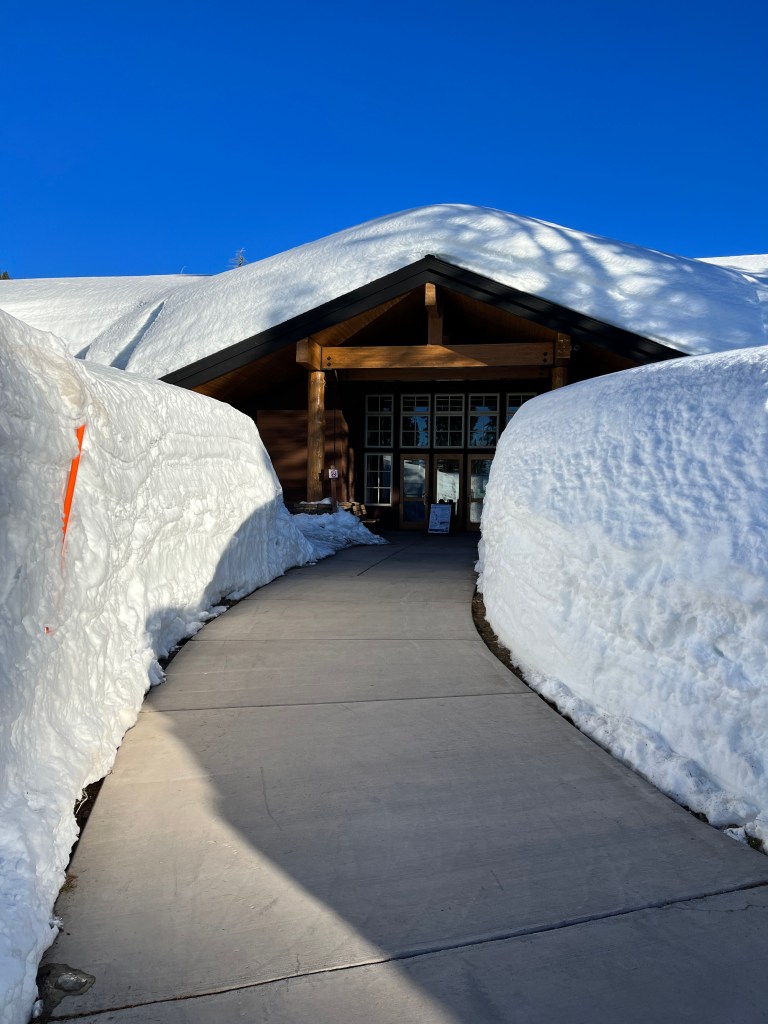
We arrived at the parking lot and, with the temperature dropping, made the decision to wait for medics inside the visitor center.
This was the most painful time for me because by then my adrenaline had subsided and I hadn’t received any pain medication. It was just me and my broken leg.
The medics arrived and loaded me onto a gurney. We discussed removing my boot but decided it would be better to wait until I was in the emergency room.
They asked if I wanted the boot off my other foot for comfort but I said to leave it. My thinking was when I got to the ER I would want the staff to get a practice run at boot removal on my uninjured leg so they could more quickly and easily remove the boot from the injured leg.
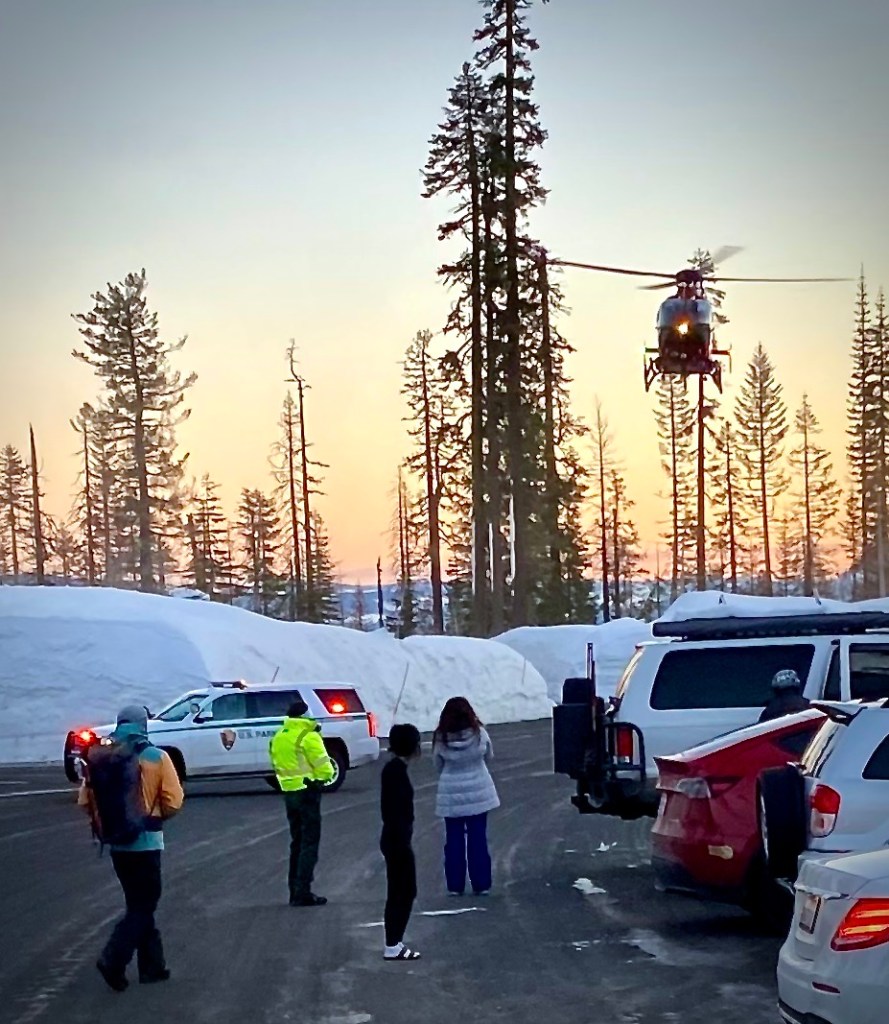
After the boot conversation I was able to ask my guides to call my wife and tell her I was in good care and she could meet me at the hospital the next day, when driving conditions would be safer.
We waited until the helicopter arrived. At that point they rolled me to the rear of the chopper, loaded me in and we were off to the hospital in Chico.
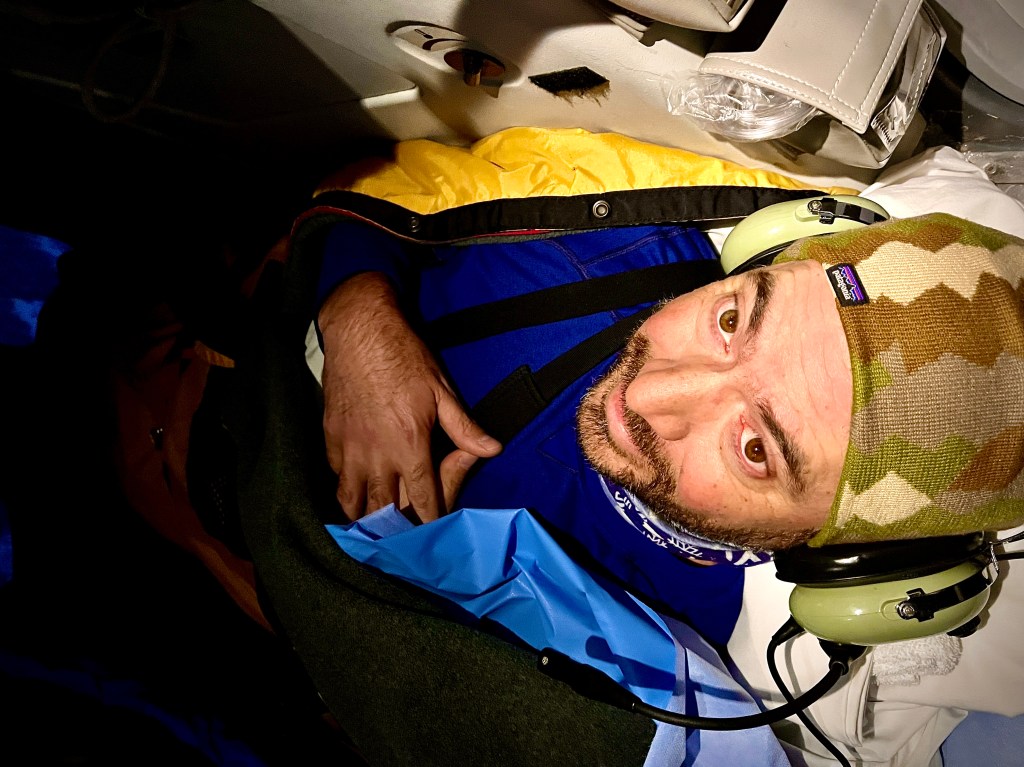
Once we got to the ER the staff got my boot off, which was painful, and X-rayed my leg.
They determined surgery could wait until the next day, but they would need to reduce the fracture. They told me they would try without sedating me but that if it was too painful sedation was an option.
It was too painful.
I remember the anesthesiologist placing the mask on me and then it went blank. When I regained consciousness, maybe 15 minutes later, my leg was wrapped in bandages and elevated on pillows.
I spent the night in a hospital room in discomfort. Painkillers numbed the pain but it still hurt and any sleep I got was fitful, at best.
The following morning my wife arrived about the same time as the orthopedic surgeon.
It was great to see both of them. Robin brought loving kindness I really needed. The surgeon brought a calm, confident energy as she described the procedure and answered my questions.
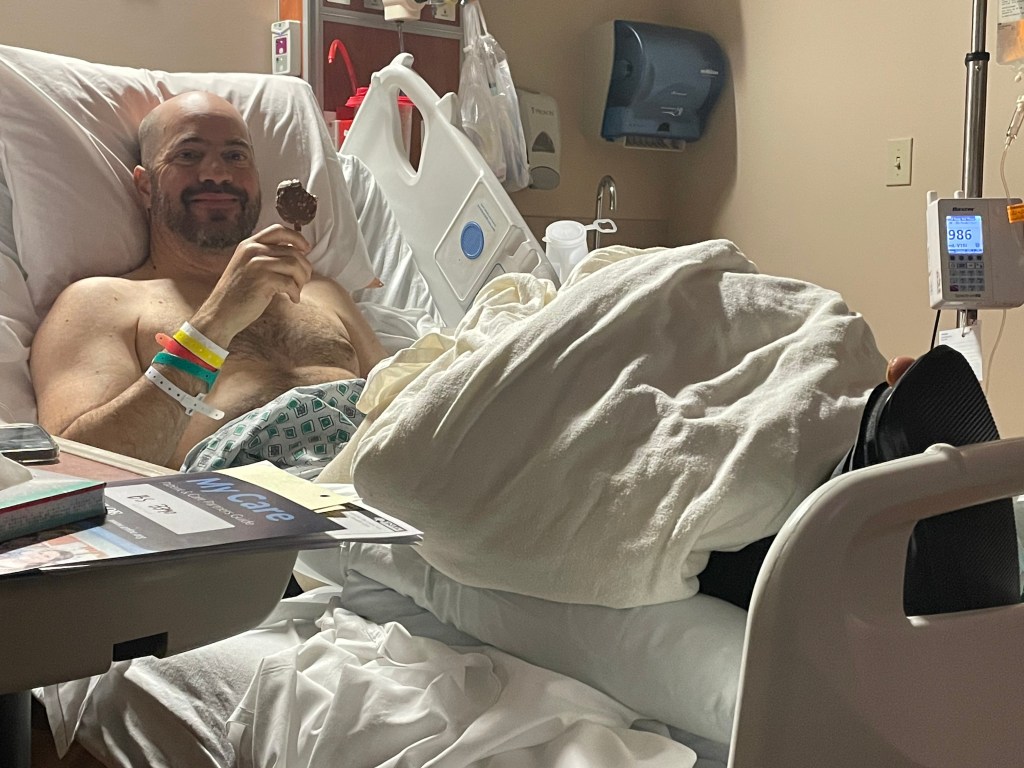
They rolled me into the operating room and I remember some small talk about the day’s football games before another mask came out and I went blank.
When I woke up several hours had passed. I was back in my room, leg elevated and wrapped but in less pain. The football game was on television.
The break, the surgeon said, was a rotational fracture that, fortunately, stopped before it reached my ankle.
She inserted a titanium rod from my knee and down through my tibia and secured it in places with nails and screws.
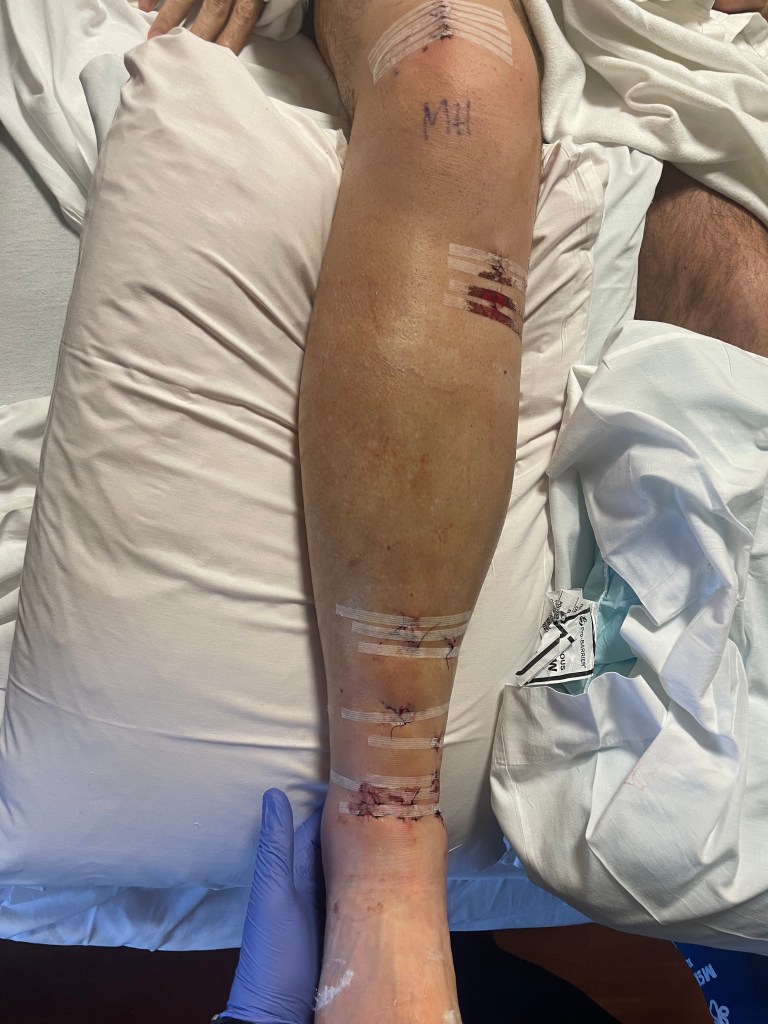
The hardware, she said, is for life.
Since then it’s been a roller coaster of emotion and pain and swelling.
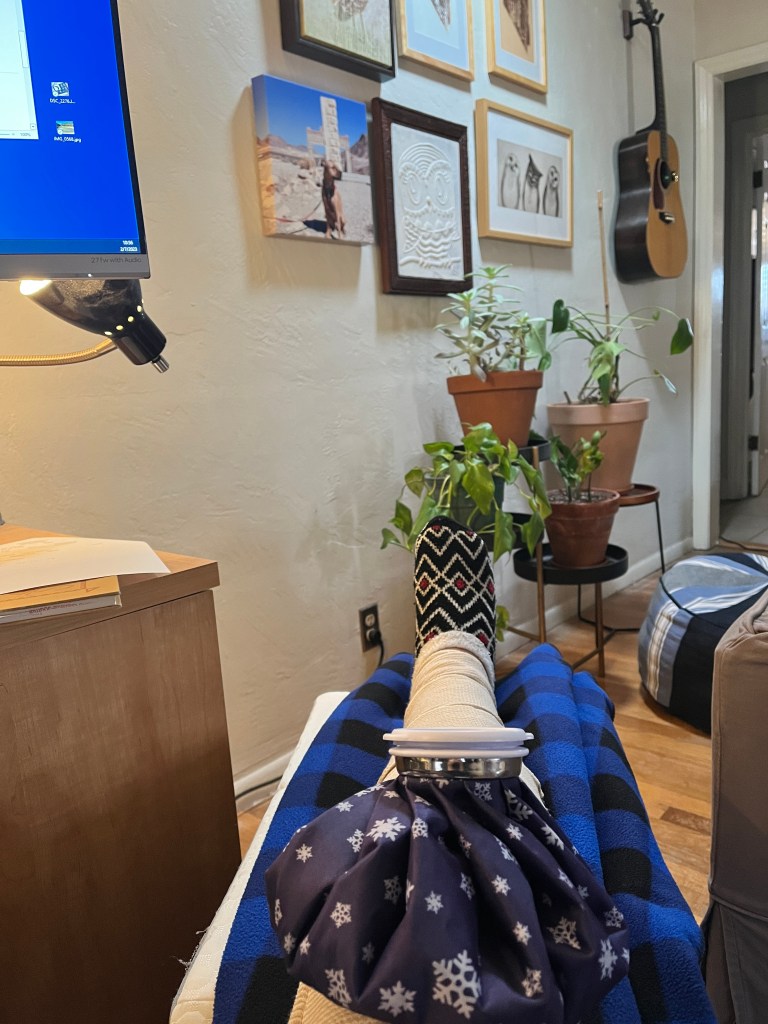
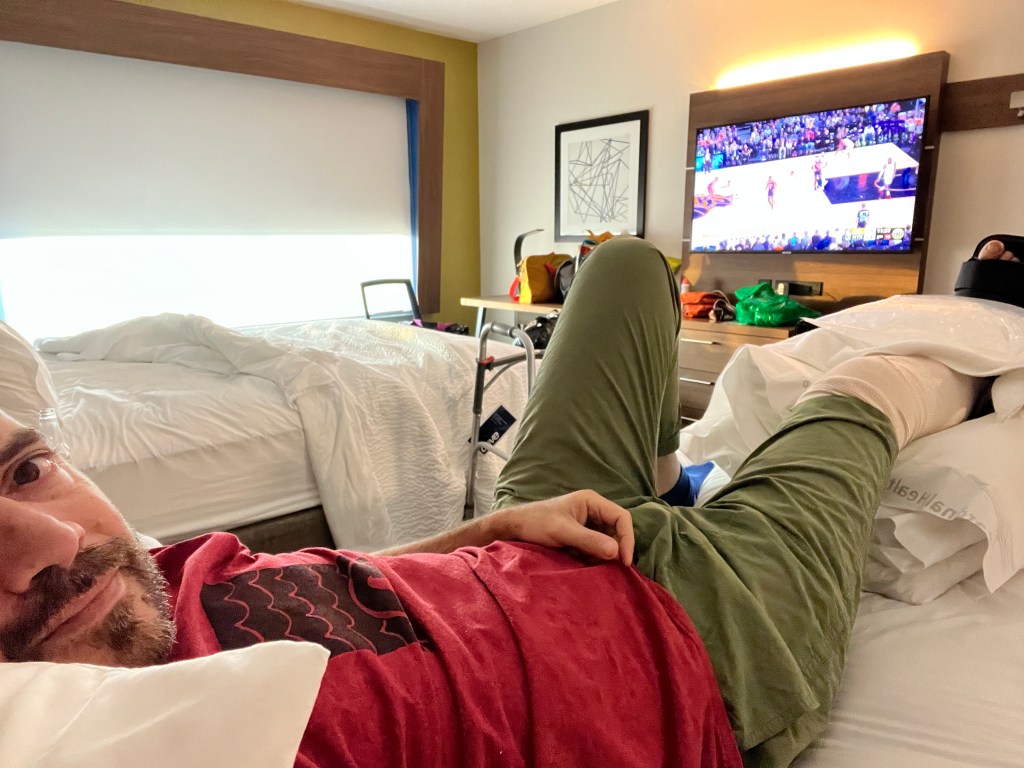
The good news is the pain and swelling seems to be be responding to rest, ice and elevation. And I’ve gotten incredible support from my wife, friends, colleagues and family which has helped incredibly on the emotional side.
The most difficult aspect as of right now is fatigue. I’m stuck on the couch sleeping is difficult because I can only lay on my back with my leg elevated. And the leg itself goes through cycles of pain and discomfort.
Still, I’m incredibly privileged and fortunate to have health insurance and networks of personal and professional support.
There are far too many people in this country who would be set back much, much further than me had they had a similar injury.
As my recovery progresses I’m looking forward to getting back on my feet and resuming activity. At the time of my injury I was in the midst of my most sustained run at yoga practice, which I’d like to resume.
I’d also be super grateful for a chance to review the incident with my rescuers. I’m interested in what we did right as a group and in learning how I can be better prepared in the future.
One thing I noticed was how the guides used their Garmin devices not to call for rescue but to communicate with their own support network.
I carry a Garmin in the field but until the incident hadn’t put much thought in how to best leverage the technology. Communication with outside logistical support seems like it could make any sort of emergency response go more smoothly.
Other than that, I’m grateful for Emily and Sean and everyone else who came to my aid.
The whole episode was painful and I wouldn’t wish it on anyone, but I did learn a ton from the experience. It really helped me close the gap between the technical aspects of my emergency training and how it’s applied in an actual event.
The main takeaway for me, I’d say, is that patient comfort isn’t just a nice thing to do while helping someone with a wilderness emergency. It’s absolutely critical.
I’ll leave it there for now but will probably pick up on that topic again later.


Leave a Reply